
Consumer Identity Matching API: What Matters
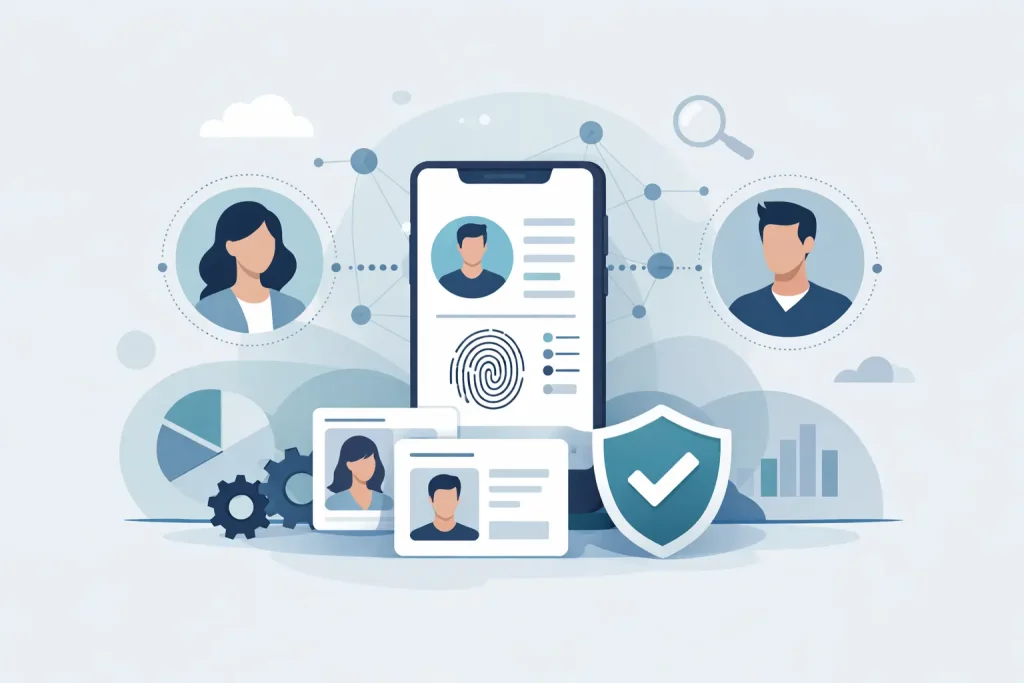
A lead submits a form with a real name, a recycled phone number, and an email that belongs to someone else. The CRM accepts it, the dialer queues it, marketing suppresses the wrong household, and compliance inherits a mess that started with one unchecked record. That is where a consumer identity matching api earns its keep – not as a nice-to-have enrichment tool, but as a control point before bad data moves downstream.
For teams that buy, collect, route, or act on consumer data at scale, identity matching is an operational discipline. The question is not whether two fields look plausible. The question is whether the person, phone, email, and address signals belong together strongly enough to support outreach, authentication, underwriting, or suppression decisions. A weak match can waste media spend. A false positive can create regulatory exposure. An unmatched record can still be usable, but only if the workflow knows how to treat it.
What a consumer identity matching API actually does
A consumer identity matching API evaluates whether multiple consumer attributes refer to the same individual or household with a usable level of confidence. Depending on the provider, those attributes may include name, postal address, email, mobile number, date of birth, and other identity markers. The API does not simply standardize inputs. It compares them against reference data, historical associations, and validation logic to return a match outcome.
That outcome is rarely binary in any serious environment. Good matching infrastructure returns confidence signals, attribute-level findings, and sometimes reasons for mismatch. For example, a record may show a strong association between name and address, but a weak or stale association between that same consumer and the submitted phone number. That distinction matters because operations teams do not treat every mismatch the same way. A lending workflow may step up verification. A call center may suppress the number but keep the lead. A marketing form may ask the user to correct one field before submission completes.
Why consumer identity matching API decisions affect revenue and risk
Bad records do more than lower database quality. They distort performance across the stack.
When a sales team works bad leads, agent productivity falls and contact rates drop. When outreach systems call or text numbers tied to the wrong person, complaint risk rises. When onboarding accepts synthetic or manipulated identities, fraud controls move from prevention to remediation, which is far more expensive. When suppression logic misses because identifiers are fragmented, organizations contact consumers they meant to exclude.
Identity matching sits at the center of these problems because most downstream systems assume the incoming record is coherent. They are built to route, score, message, and authenticate. They are not built to question whether the name, device, number, and address should have been grouped together in the first place.
That is why the right API should be evaluated as infrastructure, not enrichment. It affects contactability, fraud prevention, deliverability, consent governance, and auditability. If the match layer is weak, every dependent process inherits uncertainty.
What to look for in a consumer identity matching API
Accuracy matters, but accuracy alone is not enough. Buyers should look at how the API handles ambiguity, stale associations, and partial submissions.
First, the response model needs to support action. A simple match or no-match flag may work for low-risk routing, but it is not enough for compliance-sensitive workflows. Teams need to know whether the phone matches the consumer, whether the address is current, whether the email has a historical tie, and how confident the system is in each relationship.
Second, latency matters if matching happens during form completion, lead intake, or authentication. If the API adds too much friction, product teams will bypass it. Real-time decisioning has to be fast enough to sit in the path of conversion without damaging the user experience.
Third, coverage matters by channel and use case. Some organizations care most about mobile identity because they rely on calling and texting. Others care about postal resolution for direct mail, householding, or fraud review. The best fit depends on what bad data costs your operation.
Fourth, integration flexibility still matters more than many teams admit. Modern applications may prefer API delivery, but batch review, file processing, and legacy intake systems are still common in enterprise environments. If identity matching only works inside one technical pattern, adoption will be uneven.
Match confidence is not the same as truth
This is where many buying decisions go wrong. Identity matching is probabilistic. Even strong reference data cannot eliminate every edge case.
Consumers move, change numbers, share devices, use family emails, and submit inconsistent information. A high-confidence match means the available signals support a likely association. It does not mean every field is current or every downstream action is appropriate. That is why matching should be paired with purpose-built verification steps when the consequence of error is high.
For example, a strong identity match may support lead routing, but not account takeover prevention. A soft credit workflow may require stricter identity coherence than a newsletter signup. A phone number tied historically to a consumer may still be a poor candidate for SMS if line type, activity, reassignment, or consent status introduces risk.
Operationally, the right approach is layered decisioning. Use identity matching to determine whether the record hangs together. Then apply phone verification, authentication, suppression controls, or compliance rules based on the intended action.
Where identity matching fits in real workflows
In lead generation, matching should happen at the point of capture. That is the moment when a business can block obviously bad submissions, prompt corrections, or route questionable leads to a lower-cost follow-up path. Waiting until the lead hits the CRM means paid traffic, agent time, and campaign logic have already absorbed the error.
In call centers, identity matching helps determine whether the contact record is usable before the first dial. That reduces wasted attempts, protects agent time, and lowers the odds of reaching the wrong consumer. It also creates a cleaner audit trail around why a record was approved, rejected, or escalated.
In fintech and regulated onboarding, matching is one control within a broader verification framework. It can help expose mismatched identity elements early, which is useful both for fraud prevention and for reducing manual review queues. But it should not be treated as a substitute for authentication, document review, or risk scoring where those controls are required.
In data acquisition and append workflows, matching is critical for reconciliation. Purchased or appended data often looks complete while hiding weak associations. A matching layer helps determine whether a newly appended phone or email actually belongs to the intended consumer before teams use it for outreach.
Questions buyers should ask before implementation
The first question is whether the API supports your actual decision points. If your team only needs to enrich records for analytics, one approach may be enough. If the API will approve outbound communications or influence underwriting, the standard should be higher.
The second question is how the provider handles stale and conflicting data. Many operational failures come from records that are not clearly fake, just no longer current. You want to understand whether the system distinguishes present associations from historical ones and whether it exposes that distinction in a usable way.
The third question is how results are logged and audited. In regulated environments, a black-box score is hard to defend. Teams need reason codes, timestamps, and consistent response structures that can be reviewed later.
The fourth question is how the matching layer works alongside phone validation, reverse lookup, one-time passcode authentication, and credit-related workflows. Standalone identity matching can help, but the real business value shows up when the verification stack works together.
A practical standard for evaluating outcomes
A good implementation should reduce bad records before they enter high-cost systems. That means fewer unreachable contacts, better right-party contact rates, lower fraud review volume, cleaner suppression, and less manual cleanup. Those are operational metrics, not theoretical ones.
It should also improve control. Teams should know why a record passed, failed, or was sent for step-up verification. If the output cannot guide action, the API may still be technically accurate while remaining operationally weak.
For organizations that depend on clean consumer data, a consumer identity matching API is not just another data service. It is part of the decision layer that determines whether a record is fit for outreach, verification, or downstream risk evaluation. The more expensive your mistakes are, the more that distinction matters.
The best next step is not to ask whether identity matching sounds useful. It is to map where bad records create cost in your business, then place matching at the point where prevention is still cheaper than cleanup.
