
Why Google Voice & VoIP Numbers Show Up So Often in Fraud Submissions
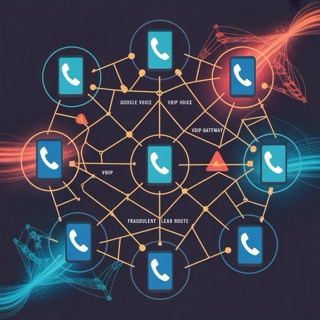
Bad customers in disguise
If you run webforms, customer engagment campaigns, outbound calling, or SMS follow-up, you’ve seen it:
A customer comes in. It looks good at first glance. The name is clean, the zip code matches, maybe even the email seems legitimate.
Then your agents call it… and it goes nowhere. Or it rings endlessly. Or the person who answers has no idea what you’re talking about.
When you look closer, you notice a pattern:
A disproportionate number of these “customers” are tied to Google Voice or VoIP numbers.
That’s not an accident.
VoIP numbers — especially Google Voice — are massively overrepresented in fraudulent and low-quality submissions. And the cost is bigger than most teams realize.
In this post, we’ll explain:
- why fraudsters use VoIP numbers so often,
- how VoIP-heavy submissions degrade performance and deliverability,
- and what you should do about it without blindly blocking real consumers.
First, what counts as VoIP?
VoIP (Voice over Internet Protocol) numbers are phone numbers that are not tied directly to a traditional cellular or landline carrier.
Common examples include:
- Google Voice
- App-based calling numbers
- SIP lines and softphone numbers
- Virtual numbers purchased online
- Low-cost “disposable” phone services
Some VoIP numbers are used by legitimate people for convenience. But many are used specifically because they make fraud easier.
Why fraudsters prefer VoIP numbers
1) They’re easy to create at scale
Creating a VoIP number is significantly easier than obtaining a traditional mobile number — especially in bulk.
Fraud operations don’t want friction. They want volume. VoIP gives them that.
2) They’re cheap (or free)
Many VoIP numbers can be generated at low cost, and Google Voice is often free.
When you’re generating thousands of fake submissions, cost per record matters. VoIP keeps it low.
3) They reduce traceability
A real mobile number is more likely tied to:
- a carrier account,
- billing records,
- device identity,
- or a consistent user history.
VoIP numbers often have a much lighter trail. Fraudsters like that.
4) Bots love VoIP workflows
A major portion of form fraud today is automated.
Bots can fill out forms endlessly, and VoIP numbers integrate easily into automated systems where the fraudster just needs a “valid-looking” phone number.
5) They’re reusable
Fraud is often iterative:
- Submit fake customer data
- Get paid
- Recycle a number later
- Submit again
VoIP numbers — especially virtual or app-based lines — can be reused or rotated rapidly.
The problem isn’t VoIP itself — it’s how it’s used
It’s important to say this clearly:
VoIP numbers aren’t inherently fraudulent.
Plenty of real consumers use Google Voice or VoIP services.
But fraud volume skews the distribution. That means VoIP becomes a high-risk signal, even if it isn’t a guarantee.
The goal isn’t to ban all VoIP numbers.
The goal is to use VoIP as a decisioning signal and treat it differently depending on your workflow.
How VoIP submissions hurt your business
Most teams think the downside is “wasted agent time.”
That’s real — but it’s not the whole story.
1) Lower answer rates → lower conversion
VoIP-heavy customer acquisition streams typically have:
- lower pickup rates
- lower intent
- lower close rates
That drags down ROI across your entire funnel.
2) It contaminates your CRM and reporting
Fake submissions don’t just waste time — they pollute data.
Your conversion rates get distorted. Your attribution gets messy. Your marketing team spends time optimizing for “customers” that weren’t real.
3) It increases compliance risk
Bad numbers and fake submissions create TCPA exposure.
Even if you’re operating responsibly, bad data can make you look reckless — and in worst cases, it can be used against you.
4) It damages deliverability with carriers
Here’s the hidden one:
When you dial or text large volumes of low-quality numbers, carriers take notice.
If enough of your traffic hits invalid numbers, spam-tagged patterns, or low-engagement behaviors, carriers may:
- tag your numbers as spam,
- block or filter texts,
- or silently reduce throughput.
When that happens, you can end up in a cycle of:
- rotating phone numbers,
- replacing DIDs,
- and fighting a reputation battle you didn’t even know you were in.
VoIP-heavy fraud streams accelerate that risk.
What should you do with VoIP numbers?
This is where most teams make a mistake.
They either:
- ignore VoIP entirely, or
- block all VoIP numbers and lose legitimate consumers.
The right approach is tiered decisioning.
Here’s a practical playbook:
Option A: Block VoIP for high-risk, high-cost workflows
If your workflow is sensitive (expensive outbound, high compliance exposure), you may choose to block VoIP numbers entirely.
This is common in:
- certain customer acquisition environments,
- high-cost sales funnels,
- or compliance-sensitive campaigns.
Option B: Allow VoIP only with OTP verification
If you want to keep legitimate VoIP users, add a step-up verification:
If line type = VoIP → trigger OTP.
That confirms the user actually controls the number.
Option C: Allow VoIP only when identity matches
VoIP isn’t always bad — but mismatched identity signals are.
If VoIP + no identity match = high risk
If VoIP + strong identity match = lower risk
Option D: Route VoIP calls differently
For marketplaces or multi-buyer routing:
- Route VoIP to a separate pool
- Apply adjusted pricing
- Offer to buyers who accept higher risk
- Flag for downstream filtering
Option E: Flag for manual review (when needed)
Some organizations simply flag VoIP submissions for internal review, especially on smaller volumes.
The best defense: verify before you engage
VoIP is a signal — but it’s most powerful when layered with verification.
A strong verification stack typically includes:
- Number Status (valid/invalid + line type + carrier)
- OTP (does the user control the number?)
- Identity Verify (does the number match the person?)
- Optional enrichment and confidence scoring
That’s how you stop bad records before they:
- waste spend,
- hurt deliverability,
- and increase risk.
Final takeaway
VoIP numbers are not automatically bad — but they are disproportionately used in fraud and low-quality submissions, which makes them a critical signal.
If you treat VoIP as “just another phone number,” your data quality and deliverability will suffer.
If you treat VoIP as a risk signal and apply smart verification, you protect:
- your conversion rates,
- your compliance posture,
- and your reputation with carriers.
If you collect consumer data, verification should come first.
