
How to Validate Phone Ownership at Scale
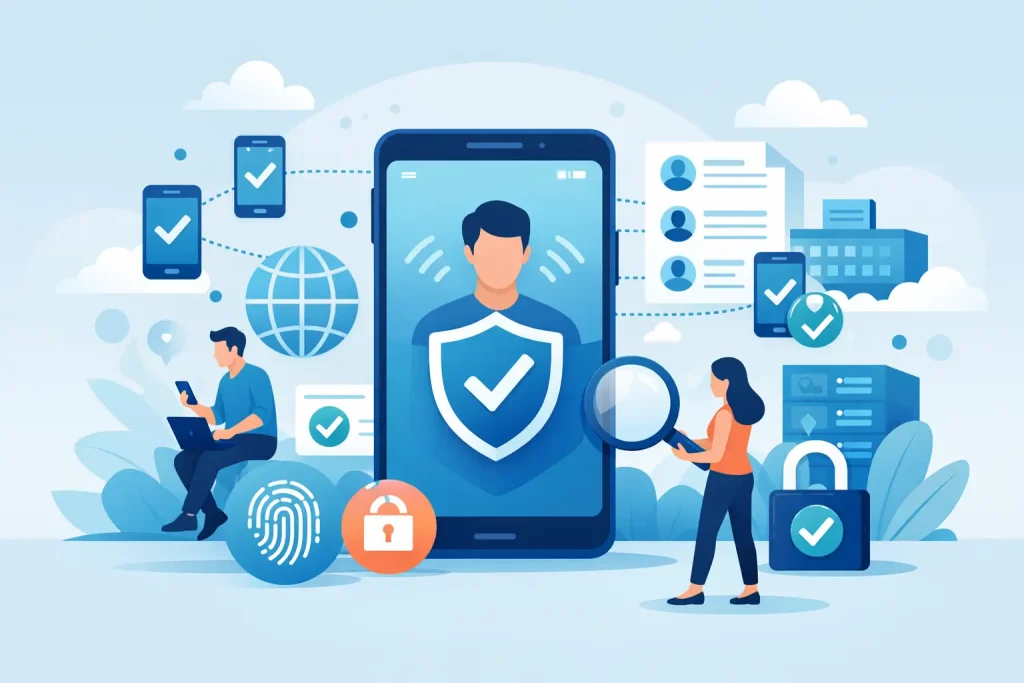
A phone number that passes a basic format check can still be the wrong person, a recycled line, a VoIP endpoint, or a number entered by someone trying to bypass your intake process. That is why teams asking how to validate phone ownership are usually not solving a data hygiene problem alone. They are trying to prevent wasted outreach, failed authentication, fraud exposure, and compliance issues before those records move downstream.
For most organizations, phone ownership validation is not a single event. It is a sequence of checks that answers different operational questions. Is the number real and active? What line type is it? Does it appear to belong to the consumer submitting it? Can that consumer receive and respond to an authentication challenge? And do you have enough evidence to support outreach, account protection, or risk review later?
What phone ownership validation actually means
In practice, phone ownership validation means confirming that a submitted phone number is not just syntactically valid, but materially connected to the person presenting it. That distinction matters. A number can be dialable and still fail your business objective if it belongs to a family member, a prior subscriber, a burner app, or a lead reseller’s recycled record.
For marketing and lead generation teams, ownership validation helps determine whether a lead can be worked efficiently and contacted compliantly. For lenders, fintech operators, and account onboarding teams, the same process helps establish identity confidence and reduce impersonation risk. For call centers and messaging teams, it protects agent time and carrier reputation by filtering out unreachable or misclassified numbers before outreach begins.
The right approach depends on your use case. If you only need to confirm that a customer controls a device right now, one-time passcode authentication may be enough. If you need stronger identity assurance, you need more than possession. You need corroboration between the phone, the person, and the record entering your system.
How to validate phone ownership in a real workflow
The most effective model is layered. Each check reduces a different type of failure.
Start with phone intelligence, not authentication
Before you send a code or route the record, verify the phone itself. Basic line intelligence should confirm whether the number is valid, active, and assigned. It should also tell you whether the line is mobile, landline, VoIP, or otherwise high risk for your workflow.
This step matters because authentication sent to the wrong line type creates friction and cost. A landline cannot complete an SMS challenge. A VoIP number may be acceptable for some use cases and unacceptable for others. A disconnected number should never move into sales cadence, account creation, or outbound messaging.
Phone intelligence also helps identify operational edge cases. Numbers can be recently ported, temporarily inactive, or reassigned. Those conditions do not always mean fraud, but they do change how much confidence you should place in the record and what next step makes sense.
Match the phone to the consumer identity
If your goal is true ownership validation, network status alone is not enough. You need evidence that the phone is associated with the person who submitted it. This is where reverse lookup, identity resolution, and data append become useful.
A practical ownership workflow compares the submitted phone number to the consumer’s name, address, and other available identifiers. When the phone aligns with the rest of the identity record, your confidence increases. When it conflicts, you have a decision to make. You may reject the record, route it for manual review, ask for a different number, or require stronger authentication.
This is also where many businesses discover that a large share of bad records are not random errors. They are low-intent submissions, affiliate abuse, synthetic combinations of real and fake data, or household-level mismatches that make downstream contact and attribution unreliable.
Use OTP to confirm present control, not permanent ownership
One-time passcode authentication is a valuable control, but it is often misunderstood. OTP proves that the person in session can receive a message or call on that number at that moment. It does not prove that the line has always belonged to them, that the account identity is genuine, or that the number is suitable for future outreach.
That does not reduce its value. For login security, step-up verification, and high-intent lead confirmation, OTP is often the right tool. But if you treat OTP alone as complete ownership validation, you can still admit risky records into your system. Shared devices, reassigned numbers, and fraud rings using temporary services can pass a possession test under the right conditions.
The stronger model is to use OTP after line validation and identity matching, not instead of them.
Where businesses get phone ownership validation wrong
The most common mistake is relying on a single signal. A form validator confirms that a number has ten digits and the team assumes the record is usable. Or an OTP is completed, and everyone treats the customer profile as fully verified. Those shortcuts create hidden loss later through failed contact rates, low RPC performance, carrier filtering, and compliance exposure.
Another mistake is validating too late. If you wait until after media spend, lead purchase, CRM routing, or agent assignment, the cost of bad data is already locked in. Ownership validation works best at the point of capture, where it can prevent bad records from entering downstream workflows at all.
There is also a policy mistake that shows up in regulated or high-volume outreach environments. Teams may validate that a number is reachable without validating whether it is appropriate for the intended contact channel or whether the ownership evidence is strong enough to support compliant engagement. Reachability and permission are different questions, and your workflow should treat them separately.
How to choose the right level of validation
Not every record needs the same level of scrutiny. The right model depends on risk, channel, and economics.
For low-friction lead forms, you may start with line status and line type checks, then score or suppress records that fail identity matching. For account creation, lending, or fraud-sensitive onboarding, stronger controls are justified. In those workflows, combining phone intelligence, consumer identity verification, reverse lookup, and OTP gives you a more defensible decision.
Volume matters too. If you process large lead files or legacy records, batch validation may be the efficient first pass, with real-time authentication reserved for high-value or high-risk events. The goal is not to maximize friction. It is to apply the minimum control required to keep bad records from creating larger operational losses later.
Build for exceptions, not just happy-path users
A good ownership process accounts for the fact that real consumers are messy. People change numbers. Families share devices. Young adults stay on a parent account. Business owners use one mobile number across personal and commercial contexts. If your controls are too rigid, you will block legitimate users and create avoidable abandonment.
That is why exception handling matters. When signals conflict, the system should route intelligently instead of simply failing. A mismatch may call for alternate verification, manual review, or a reduced-trust workflow rather than a hard stop. Commercial discipline comes from controlling risk without breaking conversion.
Operational signals that your current process is weak
You usually do not need a formal audit to know phone ownership validation is underperforming. The symptoms show up quickly: rising undeliverable text volumes, low answer rates, poor agent productivity, repeated wrong-party contact, weak OTP completion, chargebacks tied to account takeover, or carrier performance issues tied to poor list quality.
These are not isolated channel problems. They are often evidence that bad phone data is entering the business too early and being trusted for too long. A better validation layer improves more than one metric because it affects the entire path from intake to outreach to servicing.
For organizations handling consumer data at scale, that is the real standard. Validation should produce actionable signals that can control routing, suppression, authentication, and auditability across systems. That is where infrastructure providers such as VeracityHub fit best – not as a point solution for a single form field, but as a verification layer that helps teams prevent cost, risk, and downstream contamination.
Phone ownership is never a yes-or-no question in isolation. It is a confidence decision shaped by line status, identity alignment, real-time possession, and workflow context. The businesses that get this right do not ask a phone number to prove everything at once. They ask the right verification question at the right point in the process, then act on the answer with discipline.
