
What Causes Unreachable Phone Leads?
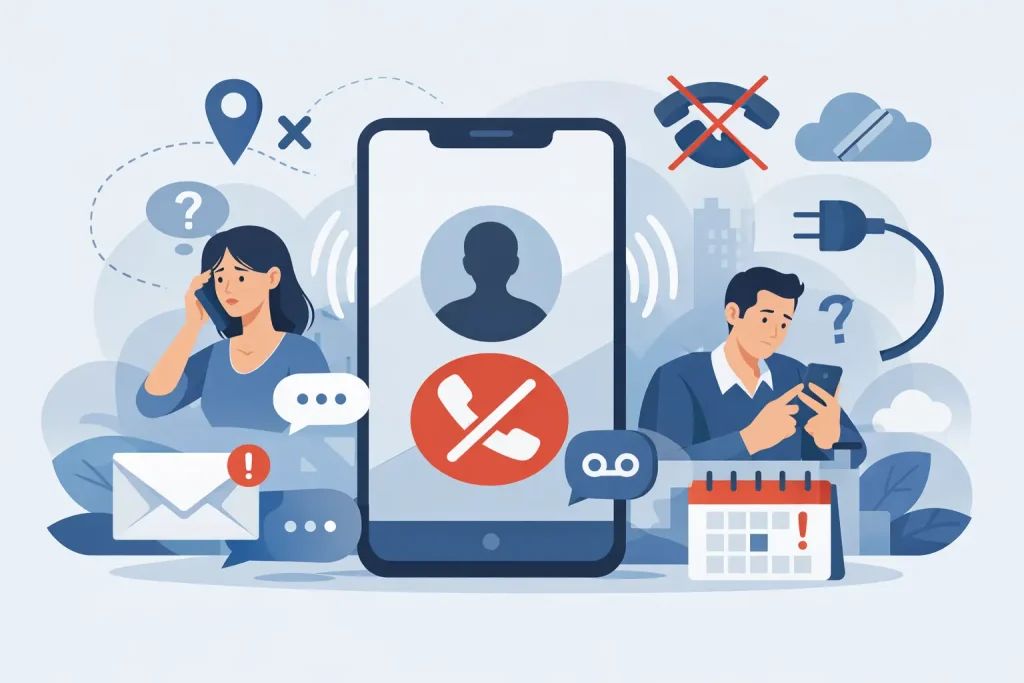
Every sales floor has seen the pattern: media spend holds steady, lead volume looks healthy, and agent productivity still drops because too many records never connect. If you are asking what causes unreachable phone leads, the answer is usually not one failure. It is a chain of data quality, consumer behavior, carrier status, and workflow gaps that compound after the lead is captured.
That distinction matters operationally. Teams often treat unreachable leads as a call center problem, when the root cause usually starts earlier – in form design, traffic quality, data intake, routing logic, or verification controls. By the time an agent dials a bad record, the cost has already been incurred.
What causes unreachable phone leads in practice
An unreachable lead is not just a wrong number. It can be a disconnected line, a VoIP number entered for low intent, a recycled mobile number, a number with no recent activity, a landline loaded into an SMS workflow, or a valid phone attached to the wrong person. In some environments, the record is technically dialable but still operationally unreachable because the consumer will never answer unknown calls, never opted into that communication channel, or was captured with false identity information.
That is why blanket lead scoring does not solve the problem. Contactability depends on whether the phone number is real, current, associated with the intended consumer, permitted for the intended outreach method, and routed into the right process. Miss any one of those checks and the record can fail downstream.
Bad source data is still the biggest driver
The most common reason for unreachable phone leads is simple intake failure. Consumers mistype phone numbers on web forms. Affiliates pass malformed records. Call center agents manually key digits incorrectly. Imports map the wrong field. Purchased data arrives stale. None of this is sophisticated, but it creates immediate waste.
The trouble is that many systems only validate format, not reality. A ten-digit number that passes front-end formatting can still be disconnected, inactive, or unrelated to the person who submitted it. If your controls stop at syntax, you are filtering for clean-looking bad data.
Lead source quality also varies more than many teams admit. Incentivized traffic, co-registration flows, sweepstakes entries, and low-friction forms tend to produce higher rates of fabricated or low-intent phone data. A source can look efficient on cost per lead while quietly depressing actual contact rates.
Fraud and intentional misrepresentation
Some unreachable records are not accidental. They are deliberately false. Consumers may provide secondary numbers to avoid follow-up, use borrowed phones, or enter disposable VoIP numbers to access gated content. Fraud rings do this at scale, often combining synthetic identity elements with phone numbers that can receive one-time passcodes but are not useful for ongoing outreach.
For lenders, financial marketers, and any business making regulated contact attempts, this is more than a conversion issue. False phone data can distort consent records, create identity mismatch, and undermine auditability. A lead that cannot be tied confidently to a real consumer should not move through the same workflow as a verified applicant or prospect.
Line status changes after capture
Even good data decays. This is one of the less obvious answers to what causes unreachable phone leads, especially for teams working older lead pools. A number that was callable last week may be disconnected today. Mobile subscribers switch carriers, abandon prepaid accounts, port numbers, or change devices. Employers reassign business lines. Families share phones, then stop.
This is why point-in-time validation and aged lead strategy need to be separated. A verified number at intake is useful, but if outreach happens days or weeks later, the status may no longer be reliable enough for high-volume campaigns. The longer the delay between capture and contact, the greater the need for refreshed status checks.
Recycled numbers introduce another layer of risk. A number can remain active while no longer belonging to the original consumer. In voice outreach this hurts efficiency. In text messaging it can create consent and compliance exposure if the new subscriber never opted in.
Channel mismatch makes valid numbers unreachable
Some phone leads are unreachable because the number and the outreach method do not match. A landline loaded into an SMS campaign will fail even if the record appears complete. A mobile number routed to voice when the audience screens unknown calls may underperform despite being active. A business switchboard in a consumer workflow is another common mismatch.
This is where phone intelligence matters more than raw contact data. Knowing whether a number is wireless, landline, VoIP, or recently ported changes how it should be used. Teams that do not classify numbers before outreach tend to overestimate list quality and underestimate channel-specific failure.
Wrong person, right number
One of the more expensive failure modes is identity mismatch. The phone number itself may be active, but it belongs to someone other than the intended lead. This happens when a user enters a family member’s number, a broker appends outdated contact data, or records are merged incorrectly in the CRM.
Operationally, these records are often misread as low answer rates rather than bad identity resolution. Agents call repeatedly, disposition the lead as no contact, and move on. Meanwhile the underlying issue is that the phone was never associated with the right person in the first place.
Workflow design often makes the problem worse
Unreachable lead rates rise when verification is delayed until after acquisition. If invalid numbers are accepted into downstream sales, marketing, and compliance systems, every subsequent process inherits the problem. Dialers get polluted, suppression logic becomes less trustworthy, and agent time is spent proving a record is bad rather than working a viable opportunity.
Routing design matters too. When systems fail to separate verified from unverified records, high-value queues get crowded with low-confidence leads. The result is not just lower contact rates. It is lower close rates on the leads that deserved faster handling.
There is also a timing issue. Lead contactability drops quickly when first outreach is delayed. Some teams interpret this as unreachable data when it is actually a response-window problem. The number may be valid, but the consumer’s intent expired before the first call or text. That is why unreachable should be analyzed as both a data problem and a process problem.
Compliance controls can limit contactability by design
Not every unreachable lead should be reached. Some records are effectively unavailable because consent is missing, revocation is present, or the number falls into a restricted outreach scenario. From an operations standpoint, that still reduces usable lead volume, but it is not a defect. It is the system correctly preventing risky contact.
This distinction is important in regulated environments. A number may be active and associated with a real consumer, yet still unsuitable for a campaign because consent language was inadequate, channel permissions were not captured properly, or the record cannot support an audit trail. Treating all unusable leads as a sales issue hides compliance gaps that need upstream correction.
How to reduce unreachable phone leads
The practical fix is not more dialing. It is earlier verification and better segmentation. Validate phone numbers at the point of capture, not after the lead enters your queue. Check status, line type, and reachability signals before the record is accepted as sales-ready. Where identity confidence matters, match the number to the consumer rather than assuming the submitted value is trustworthy.
Teams should also apply source-level controls. Measure unreachable rates by partner, campaign, form path, and acquisition channel. A source with cheap leads and poor phone validity is not cheap. It simply moves cost into wasted agent labor, lower connect rates, and weaker conversion efficiency.
For older databases, refresh before outreach. Batch phone verification is often more cost-effective than running a large dialing program against stale records. The same logic applies to texting. If a number cannot be classified confidently for the intended channel, it should be held back until verified.
A company like VeracityHub fits here as infrastructure, not as a cosmetic enrichment layer. The value is in using real-time verification, phone status checks, identity matching, and compliance-aware workflows to stop low-quality or risky records before they distort downstream performance.
The teams that improve contactability fastest are usually not the ones making more calls. They are the ones treating phone data as a controlled input, with verification, routing, and audit logic built in from the start. When unreachable leads show up in volume, they are rarely random. They are a signal that the intake layer is allowing too much uncertainty into the system.
