
How Lenders Confirm Applicant Identity Before Funding
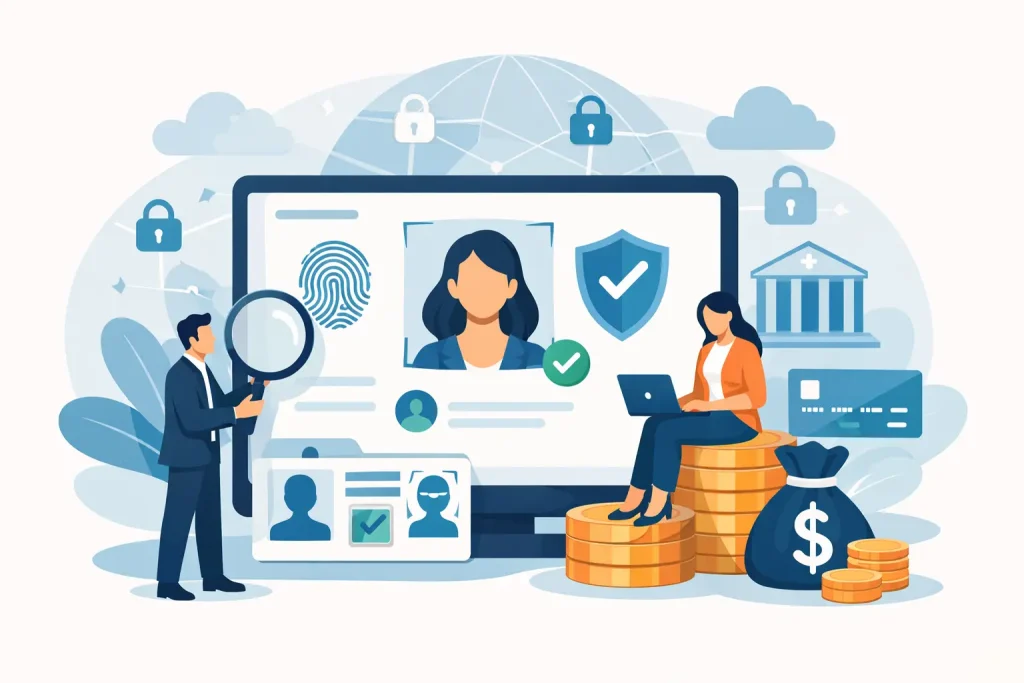
A loan application can look complete and still be unreliable. A name, address, phone number, Social Security number, and bank account may all be present, yet belong to different people, be synthetic, or be attached to a device associated with repeat fraud. For lenders, the cost of accepting that record is not limited to a single bad loan. It can include charge-offs, manual review expense, compliance exposure, and a damaged ability to trust future application traffic.
How Lenders Confirm Applicant Identity
Lenders confirm applicant identity by comparing information supplied during an application against independent data sources and behavioral signals. The objective is not simply to prove that a person exists. It is to establish reasonable confidence that the applicant is a real person, is the person represented in the application, and can be connected to the identity and contact information being used to obtain credit.
The exact process depends on the product, loan amount, channel, risk tolerance, and regulatory obligations. A lender offering a small-dollar loan may prioritize real-time friction management and fraud prevention at the point of intake. A mortgage lender may require deeper document review, credit file analysis, and source-of-funds verification. In either case, effective identity confirmation is a layered control, not a single database match.
Matching core identity attributes
The first layer is often a knowledge-based match. The lender compares the applicant’s name, date of birth, address, and Social Security number or Individual Taxpayer Identification Number against trusted consumer, credit, public-record, and identity data sources.
A successful match can indicate that the supplied details are internally consistent and associated with an established identity. A mismatch does not automatically mean fraud. Consumers move, use variations of their legal name, have thin credit files, or enter information incorrectly. But a mismatch is a useful routing signal. It may trigger a correction prompt, step-up authentication, additional documentation, or a manual review queue.
The strength of this layer depends on data quality. A lender that accepts malformed addresses, disconnected phone numbers, duplicated records, and unverifiable email addresses creates unnecessary ambiguity before underwriting has even started. Identity controls work better when contact and identity data are validated at capture rather than cleaned up after an application enters multiple downstream systems.
Reviewing identity documents
When risk rules require more assurance, lenders may ask the applicant to submit a driver’s license, state ID, passport, or other approved document. Document verification tools examine the document’s format, security features, machine-readable zones, expiration status, and signs of image manipulation.
This is useful, but document collection alone is not proof that the applicant is the document holder. Fraudsters can use stolen images, sophisticated forgeries, or genuine documents belonging to another person. That is why lenders commonly pair document checks with selfie comparison, liveness detection, or a knowledge and account-based challenge.
There is a trade-off. Stronger document requirements can reduce fraud losses, but they also add friction and can reduce completion rates among legitimate applicants. The right threshold should reflect the risk of the transaction. Requiring a passport-style review for every low-risk application may be excessive. Skipping step-up checks for applications showing multiple high-risk signals is a more costly mistake.
Verifying the phone number and email address
A phone number is not just a communication field. It is an identity and authentication signal. Lenders can check whether a number is valid, reachable, mobile or landline, recently activated, disconnected, or associated with high-risk behavior. They may also evaluate whether the number has a plausible relationship to the applicant’s name and address.
One-time passcodes sent by SMS or voice add another control. A successful code entry demonstrates that the applicant has access to the phone at that moment. It does not independently prove legal identity, because a fraudster may control a prepaid number or a victim’s compromised device. Still, when combined with identity, device, and account signals, it provides meaningful evidence of possession.
Email verification serves a similar role. It can confirm that an inbox is active and help identify disposable or malformed addresses. For lenders, the operational benefit extends beyond fraud prevention. Verified contact details improve document follow-up, adverse action communications, payment reminders, and customer service routing.
Using device and behavioral signals
Digital lenders also assess the environment from which the application originates. Device intelligence can identify signals such as device reputation, IP address characteristics, geographic consistency, browser configuration, proxy use, velocity, and whether multiple applications are being submitted from a shared device.
Behavioral patterns add context. A first-time applicant entering a complete identity in seconds, switching devices repeatedly, or submitting several applications with different names but the same phone number may warrant closer review. None of these indicators should be treated as a standalone verdict. They are most effective as part of a risk score that considers corroborating evidence.
This approach helps lenders identify synthetic identity fraud, account takeover attempts, and organized application fraud that may not be visible through document review alone. It also supports more precise decisioning. Rather than sending every unusual application to manual review, lenders can reserve friction for records that show a meaningful accumulation of risk.
Identity Verification and Credit File Checks
A soft credit pull can support applicant identity confirmation while also providing information relevant to underwriting. Credit header data may help validate the applicant’s name, address history, and other identifying details. It can also reveal whether the supplied identity aligns with an established credit file.
A thin file requires careful handling. Lack of credit history is not evidence of fraud, particularly for younger consumers, recent immigrants, or people who have not used traditional credit products. Lenders should distinguish between an identity that cannot be fully corroborated and one that presents active contradiction, such as a Social Security number associated with a deceased person or an address that conflicts with multiple authoritative records.
Credit data also carries compliance responsibilities. Lenders need clear permissible-purpose controls, appropriate disclosures where required, secure handling procedures, and auditable workflows. The identity verification process should be designed alongside fair lending, privacy, and adverse action requirements, not bolted on after the fact.
Building a Risk-Based Verification Workflow
The most efficient lenders do not apply the same verification path to every applicant. They use a risk-based workflow that begins with low-friction checks and escalates only when signals justify it.
For example, a known returning customer with a stable phone number, consistent device, matched identity attributes, and no unusual activity may proceed with minimal interruption. A new applicant with a recently activated mobile number, inconsistent address data, a high-risk IP address, and a failed database match should receive additional verification before an underwriting decision or funds disbursement.
A practical workflow usually combines four operating principles:
- Validate identity and contact fields in real time before the application is accepted.
- Score matches, mismatches, velocity, device context, and authentication outcomes together.
- Route exceptions to the appropriate next step, such as OTP verification, document review, manual review, or decline.
- Retain decision evidence so teams can investigate disputes, tune rules, and demonstrate control effectiveness.
The last point matters. Auditability is not administrative overhead. When fraud rates change or customer complaints rise, lenders need to know what data was received, which checks ran, what results were returned, and why the application followed a particular path.
Where Identity Controls Commonly Fail
Many gaps are operational rather than technical. A lender may verify identity after a lead has already been sold, routed, or worked by a call center. It may use phone verification only for marketing outreach and never feed the result into fraud rules. Or its product team may deploy a strong point solution without creating a usable exception process for operations and compliance teams.
Fragmented controls produce fragmented decisions. The better model is to treat verification as infrastructure at the point of capture and throughout the application lifecycle. Real-time APIs can support digital intake, while batch files and manual upload options can help teams validate legacy lead files, purchased lists, and back-office records before they generate further cost.
VeracityHub supports this operating model by providing identity, phone, authentication, reverse lookup, and soft credit signals that can be applied through the delivery method that fits the lender’s environment. The value is not in collecting more data for its own sake. It is in producing actionable signals early enough to change the decision.
A lender does not need perfect certainty on every application. It needs a defensible, proportionate process that detects contradictions early, applies friction where it earns its cost, and gives legitimate applicants a clear path forward.
