
What Is a Soft Credit Check and When Is It Used?
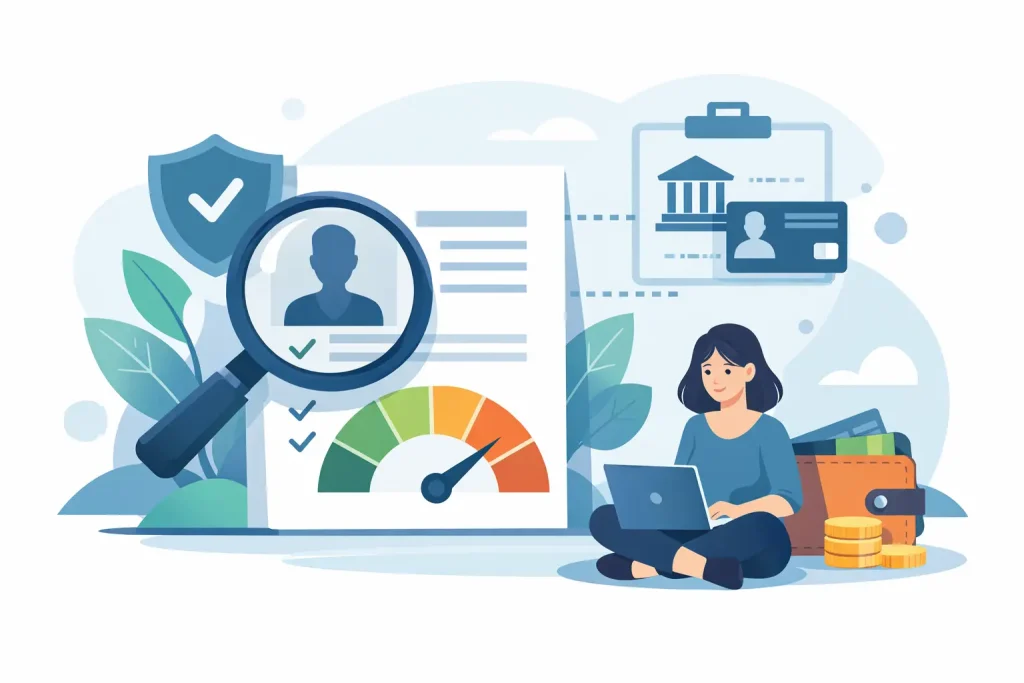
A consumer can submit a form, answer the phone, and appear fully qualified – only for the downstream workflow to reveal that the record is incomplete, misrepresented, or financially ineligible. Knowing what is a soft credit check helps businesses add an early qualification signal without creating the friction or score impact commonly associated with a hard credit inquiry.
A soft credit check, also called a soft pull or soft inquiry, is a review of certain consumer credit information that generally does not affect the consumer’s credit score. It may be used to support prequalification, identity and fraud review, account management, or consumer-initiated credit monitoring. For organizations, it can provide a more informed view of an applicant before committing agent time, underwriting resources, or acquisition spend.
The key word is generally. The information returned, the permitted use, the required consumer disclosures, and the operational value of a soft pull all depend on the business purpose, the consumer reporting agency, and the organization’s agreements and compliance program.
How a Soft Credit Check Works
A soft credit check is typically initiated through a consumer reporting agency or an authorized data provider. The requesting organization submits identifying information, such as a consumer’s name, address, date of birth, and sometimes Social Security number or other identity attributes. The provider attempts to match that information to a credit file and returns the data elements available for the approved use case.
The inquiry may appear on the consumer’s credit report, but it is ordinarily visible only to the consumer and not to other lenders reviewing the file for a new credit decision. Because it is not treated as an application for new credit in the same way as a hard inquiry, it does not generally lower the consumer’s score.
That distinction matters at the point of capture. A consumer considering an offer may be willing to complete a low-friction prequalification flow but hesitate if they believe they are authorizing a full application and a score-impacting hard pull. Clear language about what the business is requesting and why is both a conversion consideration and a compliance requirement.
Soft Credit Check vs. Hard Credit Check
The difference is not merely technical. It affects consent design, consumer expectations, operational routing, and the stage at which a business makes a decision.
A hard credit check is commonly associated with a consumer applying for credit, such as a mortgage, auto loan, credit card, or personal loan. Lenders use it as part of a formal underwriting decision, and it can affect the consumer’s credit score. A hard pull usually signals that the consumer is actively seeking new credit.
A soft credit check is more often used earlier in the funnel or for purposes that do not involve a final extension-of-credit decision. A lender may use it to prequalify consumers for offers. A financial services business may use it for account review. A consumer may trigger one by checking their own credit file. Some organizations also use credit-based attributes in identity, fraud, or verification workflows where permitted.
Neither type of inquiry is inherently better. A hard pull may be necessary when the business must obtain the information required for final underwriting. A soft pull can be the right first step when the goal is to assess likely eligibility, prioritize outreach, or reduce unnecessary applications. The operational error is treating a soft inquiry as a shortcut around the requirements that apply to consumer reporting data.
What Information Can a Soft Pull Reveal?
The answer depends on the provider relationship and approved permissible purpose. A soft credit check is not a standardized data package with the same fields in every workflow. Depending on the use case, it may return a credit score, score range, tradeline or payment-history indicators, public-record data where applicable, inquiry information, address history, or other attributes used to assess identity and creditworthiness.
For many businesses, the most useful output is not the full underlying report. It is a decision-ready signal: whether the file matched, whether a score or range meets a prequalification threshold, whether identity attributes are consistent, or whether the record should move to a different workflow.
This is where disciplined data handling matters. Organizations should request only the information needed for the defined business purpose, retain it according to documented policy, and restrict access to personnel and systems that need it. A broad data pull without a defined decision process creates compliance exposure without improving performance.
A Soft Pull Is Not a Guarantee of Approval
Prequalification is not final approval. A consumer’s credit profile can change, the initial match can be incomplete, and final underwriting may require additional verification, income documentation, fraud screening, or a hard inquiry.
Marketing and sales teams should avoid presenting soft-pull results as a promise. The better approach is to describe the result accurately: the consumer may be prequalified or may meet initial criteria, subject to verification and final review. That language protects consumer expectations and keeps the handoff to underwriting cleaner.
Common Business Uses for Soft Credit Checks
The strongest use cases are those where a soft pull reduces waste before a more expensive action occurs. In lending, that often means prequalification. Rather than asking every prospect to complete a full application, a lender can identify consumers who appear to meet baseline criteria and reserve full underwriting for those with a stronger likelihood of approval.
Lead generators and comparison platforms may use permitted credit data to route consumers toward relevant offers. This can improve matching quality, reduce transfers to providers that are unlikely to accept the applicant, and limit repeated outreach to prospects who do not fit a campaign’s criteria.
Financial institutions may also use soft inquiries for existing-account reviews, targeted offers, fraud controls, and identity resolution where authorized. For example, a mismatch between submitted identity data and credit-file attributes can be a useful signal that a record needs step-up verification before it reaches a funded account, contact center, or downstream partner.
The value is cumulative. When soft credit signals are combined with phone status verification, identity checks, and consent records, businesses can make better routing decisions earlier. VeracityHub’s infrastructure-oriented approach reflects this operating model: validation works best when it is embedded at intake, not treated as a cleanup exercise after bad records have already entered the workflow.
Compliance and Consent Are Part of the Workflow
Consumer credit information is regulated data. In the United States, organizations using consumer reports must have a permissible purpose under the Fair Credit Reporting Act and comply with applicable federal and state requirements, consumer reporting agency rules, and contractual obligations. A consumer’s agreement to submit a form does not automatically authorize every possible use of credit data.
The correct workflow begins with a specific purpose. Is the organization prequalifying for credit? Reviewing an existing account? Performing a permitted identity or fraud-related check? The answer determines what data can be requested, what disclosures are required, and whether the consumer’s written or electronic authorization is needed.
Businesses should also document the inquiry reason, timestamp, source, consumer notice or authorization where applicable, returned decision signal, and downstream action. These records support audits, complaint handling, partner oversight, and investigations into disputed decisions.
If a soft pull contributes to an adverse decision, the organization should not assume that the word “soft” removes its obligations. Adverse action requirements can apply when consumer report information is used to take adverse action. Compliance teams should evaluate the exact use case, data source, and decision logic with qualified counsel and their consumer reporting partners.
Building a Productive Soft Pull Workflow
A soft credit check produces better results when it is placed at the right decision point. Running it too early can create unnecessary cost and data exposure. Running it after agents have already spent time qualifying an applicant can defeat the purpose.
For a lending intake flow, a practical sequence may start with basic identity and contact validation. Confirm that the submitted phone number is reachable, evaluate whether identity inputs are internally consistent, capture the required disclosures and permissions, and then initiate the soft pull for eligible records. The result can route the consumer to a prequalified offer path, a full application path, a manual review queue, or a respectful decline experience.
For batch workflows, define the business rule before processing the file. Decide which records qualify for review, what outcome fields are needed, how exceptions are handled, and which teams can access the results. Batch processing can be effective for re-engagement, portfolio review, or partner-file validation, but it requires the same control over permissible purpose and auditability as a real-time API call.
Accuracy also depends on match quality. Name, address, and date-of-birth inconsistencies can produce no-hit results or incorrect associations. Treat an unmatched record as an operational state to resolve, not as proof that the consumer lacks credit history. A step-up identity workflow may be more appropriate than an automatic rejection.
The Business Case Is Better Decisions, Not More Data
A soft credit check is valuable when it helps an organization make a narrower, faster, and more defensible decision. It can reduce spend on low-probability applications, improve offer relevance, protect agent capacity, and create a less intimidating consumer experience before final underwriting.
But it is not a replacement for underwriting, identity verification, consent management, or compliance review. The organizations that benefit most use it as one verified signal in a controlled decisioning process. Build that process around a defined purpose, transparent consumer communication, and auditable routing rules, and the soft pull becomes a practical way to improve qualification without adding unnecessary friction.
