
How to Authenticate Applicants With OTP Codes
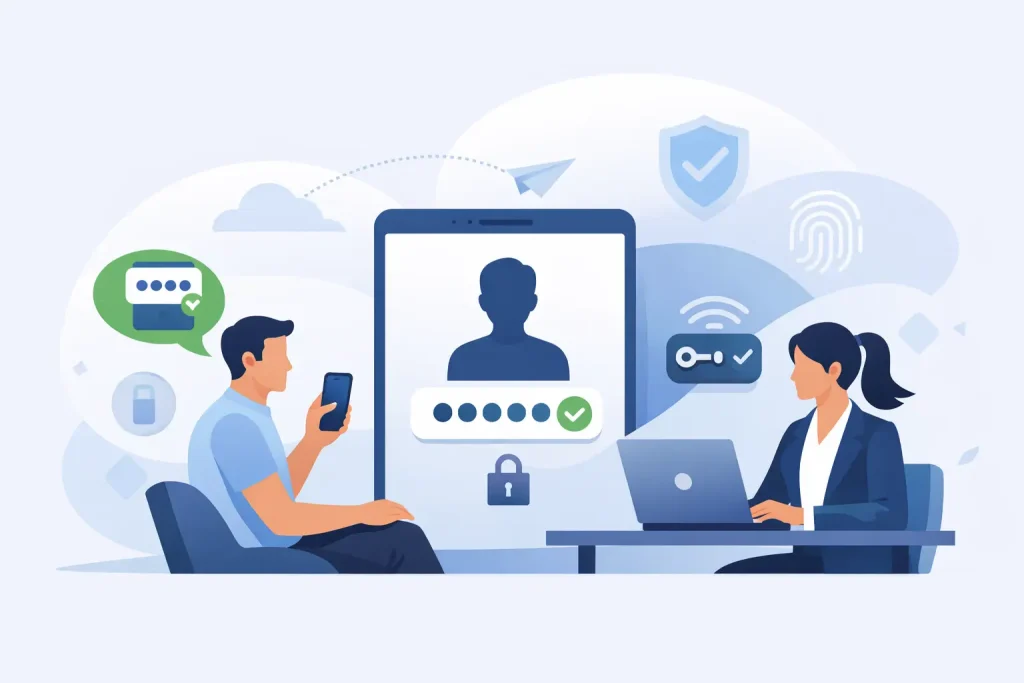
A lead form can look complete and still be operationally worthless. A phone number may be mistyped, disconnected, recycled, entered by a bot, or submitted without the consumer’s knowledge. When that record is routed to a sales team, added to a text campaign, or used to trigger a credit-related workflow, the cost of bad data begins immediately.
Organizations authenticate applicants with OTP codes to establish one critical fact before that record moves downstream: the applicant can receive and act on a code sent to the phone number provided. That proof does not replace identity verification, consent management, or fraud screening. It does create a high-value control at the point of capture, where remediation is cheapest and decisioning is fastest.
What OTP Authentication Actually Proves
One-time passcode authentication is a possession check. The system sends a time-limited code to a supplied phone number by SMS or voice, and the applicant enters that code into the application experience. A successful match indicates that, at that moment, the applicant had access to the destination phone.
For intake teams, that signal has practical value. It helps distinguish a reachable consumer from an unverified record, reduces accidental entry errors, and creates a timestamped event that can be retained for operational review. It also introduces friction that makes mass automated submissions and casual fraud less economical.
The limitation matters just as much. An OTP success does not prove that the applicant is the legal owner of the number, that the number is permanently assigned, or that the applicant’s claimed name and address are accurate. Fraudsters can control phones. Shared family devices exist. Numbers can be ported, reassigned, or accessed through compromised accounts.
Treat OTP as one verification layer, not a universal identity claim. For higher-risk use cases, pair it with phone status intelligence, identity matching, device or behavioral signals, and risk-based review rules.
Authenticate Applicants With OTP Codes Before Routing
The best placement for OTP authentication is usually before an applicant enters an expensive or regulated downstream process. That means before a record is sold, transferred to a call center, enrolled in an outreach sequence, presented to a lender, or used to initiate a sensitive account action.
For lead generation programs, the code challenge should occur after basic form validation but before lead acceptance and buyer routing. This prevents teams from paying for records that cannot demonstrate control of the submitted phone number. It also reduces the volume of dead-end records entering CRM systems, dialers, and marketing automation platforms.
For financial services and account-opening flows, the timing depends on risk. A low-friction application may use OTP early to confirm contactability. A higher-value transaction may require a second verification event before a material action, such as changing payout instructions, resetting credentials, or accepting an offer. Reauthentication at those moments helps protect against session takeover and stale contact information.
The objective is not to place the most friction possible in front of every applicant. It is to place the right control before the cost and risk of accepting an unverified record increase.
Build an OTP Workflow Around Decisions, Not Just Delivery
An OTP program performs best when the verification event drives a clear operational decision. Sending codes without defining what happens after success, failure, timeout, or repeated attempts creates inconsistent handling and weakens auditability.
Validate the number before sending a code
A phone status check can identify obvious issues before the OTP request is made, such as malformed numbers, invalid numbering patterns, or numbers that are not suitable for the intended channel. Depending on the program, carrier and line-type intelligence may also inform whether SMS, voice, or another verification path is appropriate.
This step avoids spending messaging resources on records that were unlikely to be reachable from the start. It also allows the experience to correct a simple entry error before an applicant abandons the form.
Keep the challenge short and controlled
Codes should be random, single-use, and time-limited. The expiration window should be long enough for normal message delivery and user entry, but short enough to limit replay risk. Many workflows use a brief validity period and invalidate previous codes when a new code is issued.
Control retries carefully. Unlimited resend requests can create message costs, frustrate consumers, and give attackers room to probe the process. Reasonable rate limits should apply by phone number, session, IP address, device signal, and other appropriate risk indicators. Repeated failed attempts should trigger a defined response, such as a temporary lockout, step-up verification, or manual review.
Capture evidence that can be reviewed later
For each verification event, retain the fields needed to reconstruct the outcome: normalized phone number, delivery channel, request and completion timestamps, result status, attempt count, session or transaction identifier, and the policy version applied. Do not store the passcode itself once verification is complete.
This record supports operational investigations and helps teams explain why an applicant was accepted, routed, rejected, or asked to complete another step. It is particularly useful when sales, compliance, fraud, and engineering teams need to evaluate the same event from different perspectives.
Define failure paths before launch
A failed OTP attempt is not always fraud. The applicant may have poor signal, a delayed message, a landline, a changed number, or a typo. The right response depends on the economics and risk of the workflow.
For a lower-risk lead intake path, a failed verification may mean the record is held from buyer routing until the applicant corrects the number. For an account security event, it may require a stronger alternate verification process. The key is to avoid treating all failures as identical while still preventing unverified records from quietly entering production workflows.
Balance Conversion Against Fraud and Data Quality
OTP creates a trade-off. Every added step can reduce form completion, especially when delivery is delayed or the consumer is using a number that cannot receive SMS. Yet accepting every unverified number pushes costs to teams that are far more expensive to operate: media buyers, agents, compliance personnel, collections teams, and customer support.
The relevant metric is not simply OTP completion rate. Measure qualified completion rate: the percentage of applicants who complete the application and become reachable, valid, and commercially actionable records. A form with a slightly lower raw completion rate may produce substantially better economics if it eliminates fake, mistyped, or unreachable submissions.
Risk-based routing can preserve conversion where it matters. For example, an organization may require immediate OTP verification for traffic sources with elevated fraud patterns, applicants requesting high-value products, or submissions with conflicting identity signals. Established customers or lower-risk paths may receive a lighter challenge. Policies should be documented and tested rather than left to ad hoc exceptions.
Channel choice also affects performance. SMS is often the default because it is familiar and fast, but it will not fit every applicant or use case. Voice delivery can provide an alternative for numbers that cannot receive texts. A workflow should account for accessibility, geographic scope, carrier behavior, and the communication permissions applicable to the organization’s program.
Connect OTP Results to the Systems That Act on Them
Authentication becomes valuable when its result is available where decisions are made. A verified status should travel with the applicant record through the CRM, lead distribution engine, call center queue, marketing platform, or underwriting workflow. Teams should not need to infer verification from a vague note or manually reconcile message logs.
At minimum, downstream systems should receive a clear status such as verified, pending, failed, expired, blocked, or bypassed under an approved policy. Include the verification timestamp and an event identifier so the status can be audited without exposing unnecessary data.
For organizations with modern product stacks, real-time API delivery can make this decision available during the application session. For legacy systems and batch-driven operations, secure file-based processing or managed uploads may be more practical. The integration method matters less than the control outcome: records should be routed according to verified status, not merely whether a phone field was populated.
VeracityHub can support this model as an embedded verification layer, combining phone intelligence and one-time passcode authentication so teams can determine whether a record is suitable for the next operational step.
Measure the Effect on the Whole Funnel
OTP performance should be reviewed across the complete intake and conversion path. Start with delivery rate, verification completion rate, resend rate, expiration rate, and time to completion. Then connect those signals to outcomes that leadership actually funds: contact rate, agent productivity, qualified lead rate, fraud loss, complaint volume, and cost per approved or converted applicant.
Segment results by traffic source, campaign, device type, product, state, carrier, and time of day where the data supports meaningful analysis. A high failure rate concentrated in one partner source may indicate low-quality traffic. A delivery issue tied to a specific channel may require a routing adjustment rather than a broader policy change.
Also review exceptions. Manual overrides, verification bypasses, and repeat attempts are often where process gaps emerge. If exceptions are common, either the policy is too strict for legitimate applicants or the workflow is allowing risk to bypass the intended control.
A well-designed OTP step should make applicant quality visible before it becomes a sales, service, or compliance problem. Start by deciding which downstream action requires proof of phone access, then make that verification result a required field in the routing decision.
