
Consent Audit Trail: What Your Records Must Prove
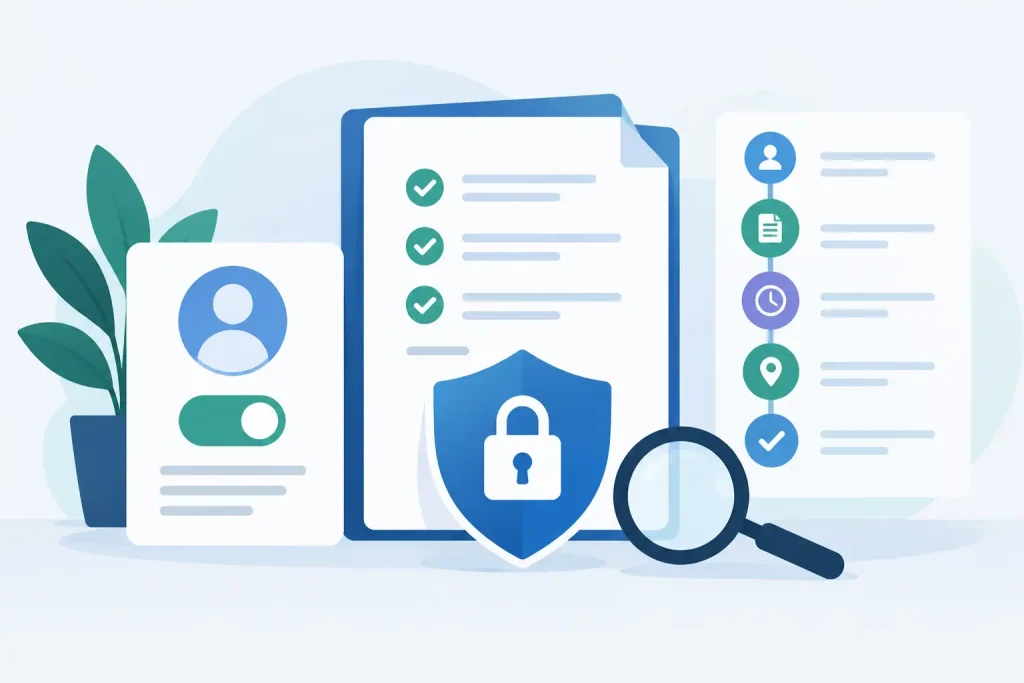
A consumer disputes a marketing call, a carrier questions a message campaign, or a regulator requests evidence behind a contact record. At that point, a checkbox in a CRM is not proof. A consent audit trail is the operational record that shows who gave permission, what they agreed to, when it happened, how the disclosure was presented, and what systems acted on that permission afterward.
For organizations that buy, capture, route, or activate consumer data at scale, consent evidence cannot be an afterthought. It must travel with the record. Otherwise, teams are left reconstructing events from vendor files, web logs, lead forms, and disconnected marketing systems while outreach is paused and risk compounds.
What a Consent Audit Trail Should Establish
A consent audit trail is a structured, retrievable record of a consumer’s permission for a defined purpose. It is not merely a stored consent status such as “yes” or “opted in.” A status tells an application whether it should send a message or place a call. An audit trail provides the evidence required to explain and support that decision.
The precise evidence required depends on the channel, the campaign, the relationship between the consumer and the business, the source of the lead, and applicable federal and state requirements. That distinction matters. Consent for an informational account message may not support promotional outreach. A consumer may authorize one brand but not a lead buyer, affiliate, or partner. Consent may also be revoked after initial collection.
At minimum, a defensible record should connect the permission event to the individual, the contact point, the disclosure, and the intended outreach. In practice, that means preserving:
- The consumer-provided name, phone number, email address, or other identifiers used to associate the event with a record
- The source, including publisher, landing page, form version, campaign, partner, or intake workflow
- The full disclosure language presented at the time of action, including relevant brand and partner references
- The event timestamp, time zone, IP address where available, user agent, session data, and submission method
- Evidence of the affirmative action, such as a checkbox state, electronic signature, form submission, or authenticated confirmation
- Subsequent consent changes, including opt-outs, revocations, preference changes, and suppression events
A screenshot alone is rarely enough. It may show what a page looked like, but it does not reliably prove that a specific consumer encountered that version, entered a specific phone number, and completed the required affirmative action. Similarly, a lead vendor’s certification is useful but should not be the only evidence available to the buyer.
Why a Consent Audit Trail Fails in Real Operations
Most consent failures are not caused by one missing field. They result from fragmented workflows. A lead generation platform captures consent, a CRM receives the lead, a dialer starts outreach, and a messaging provider processes texts. Each system may retain only part of the story.
The gaps become visible when records are transformed or sold downstream. Phone numbers may be reformatted, appended, reassigned, deduplicated, or matched to an existing customer profile. Source metadata may be overwritten by a campaign label. A consent date may survive, while the disclosure text, form version, and lead-owner relationship disappear.
Speed can make this worse. Real-time lead routing is often designed to optimize response time, not evidence preservation. A record is delivered to a buyer in seconds, then immediately passed to a sales platform and dialer. If the consent payload is not treated as a required object alongside the lead data, downstream teams receive a phone number without the proof needed to use it safely.
Batch workflows have a different risk profile. Historical data may contain contacts collected under older disclosures, imported from multiple vendors, or maintained through prior acquisitions. A single “marketing consent” flag can conceal substantial differences in source quality, collection method, and permitted use. In these cases, the right action may be to segment, re-verify, suppress, or restrict records rather than treat the entire file as equally actionable.
Build Consent Evidence Into the Intake Workflow
The strongest approach is to make consent data part of the record contract at intake. Before a lead can be routed, sold, or activated, the system should validate that the required evidence exists and is associated with the correct consumer data.
Start by defining the minimum fields needed for each communication use case. A marketing text campaign, a live-agent call, and an account servicing message should not necessarily rely on the same consent logic. Establish clear rules for what constitutes acceptable proof, which fields are mandatory, how long evidence must be retained, and who can modify it.
Next, assign immutable event identifiers. Every consent event should receive a unique ID that persists through routing, CRM ingestion, enrichment, and communication workflows. The consent record should reference the exact form version or disclosure version used at collection. If the disclosure changes, create a new version rather than replacing the old text in place.
This is where technical discipline matters. Store the original input alongside normalized values. For example, retain the raw phone number entered by the consumer, the normalized phone number used for routing, and the verification results attached to that number. This helps teams show both what was submitted and how the record was processed.
Authentication and verification can strengthen the evidence chain, although they do not independently create consent. A one-time passcode can help demonstrate control of a phone number at a particular moment. Phone intelligence can identify whether a number is active, reachable, wireless, VoIP, or recently reassigned, depending on the available data and use case. Identity verification can help reduce fraud and establish that the person completing a high-risk workflow is consistent with the claimed identity.
The trade-off is friction. Requiring an OTP on every form may reduce fraudulent or mistyped submissions, but it can also lower completion rates. The appropriate control depends on lead value, fraud exposure, channel risk, and the cost of contacting an invalid record. High-value financial applications and sensitive account actions generally justify more evidence than a low-risk newsletter signup.
Separate Consent From Contactability
A verified phone number is not proof of permission. A consumer’s consent record is not proof that the number remains reachable or belongs to the same person. These are separate controls, and organizations need both.
Treat consent as a legal and policy authorization layer. Treat phone verification, identity resolution, and contactability checks as data-quality controls. When they are combined in a workflow, teams can avoid two costly outcomes: contacting a valid number without usable authorization, and relying on valid consent tied to an unreachable, fraudulent, or reassigned number.
For example, a real-time intake workflow might capture consent evidence, validate the phone number format and status, authenticate control through an OTP where warranted, and route only records that satisfy the campaign’s acceptance rules. A batch workflow might preserve historical consent metadata while screening the file for disconnected, invalid, or high-risk contact points before loading a dialer or messaging platform.
This layered approach also protects carrier reputation. Large volumes of calls or texts to poor-quality records can increase complaints, reduce engagement, and create delivery problems. Consent documentation helps support the authority to contact a consumer. Verification helps ensure the outreach reaches a viable contact point.
Make the Trail Usable During an Audit
Evidence that cannot be located quickly has limited operational value. Compliance teams should not need engineering support to answer basic questions about a disputed interaction. A usable consent audit trail should allow authorized users to retrieve a complete record by phone number, lead ID, customer ID, consent event ID, or campaign reference.
The record should show a chronological history rather than a single current state. A reviewer needs to see the initial submission, any verification or authentication events, handoffs between systems, outreach attempts, opt-out requests, and suppression actions. Preserve source data and system-generated events separately so later processing does not obscure the original consumer action.
Access controls matter as much as retention. Consent evidence contains consumer data and should be available only to personnel with a legitimate operational, compliance, or investigative need. Maintain logs of who viewed, exported, changed, or deleted records. If a third-party lead source or service provider contributes to the evidence chain, define contractual expectations for retention, retrieval, and audit support before volume begins.
Testing should be routine. Sample recent leads and trace their consent evidence from form capture through outreach. Confirm that the disclosure version is available, timestamps are consistent, the correct brand relationship is documented, and opt-outs propagate to every activation system. Failures discovered during testing are controlled remediation work. Failures discovered after a complaint are much more expensive.
Treat Evidence Quality as a Revenue Control
A consent audit trail is often categorized as a compliance requirement, but it also improves operating performance. Teams that can distinguish documented, reachable, authenticated leads from weak records route better opportunities to agents, reduce wasted media spend, and limit the volume of questionable contacts entering outreach systems.
The practical standard is straightforward: do not ask downstream teams to trust a record they cannot explain. Build the evidence at intake, preserve it through every transformation, and make it available before the next call or text is sent. That discipline turns consent from a fragile checkbox into a controlled business asset.
