
How to Verify Phone Numbers in Real Time
A lead form converts, your routing logic fires, and an agent calls within seconds – only to hit a disconnected line, a VoIP burner, or a number that should never have entered the workflow in the first place. That is why businesses need to understand how to verify phone numbers in real time. The cost of bad phone data is not theoretical. It shows up immediately in wasted media spend, lower contact rates, agent inefficiency, carrier risk, and preventable compliance exposure.
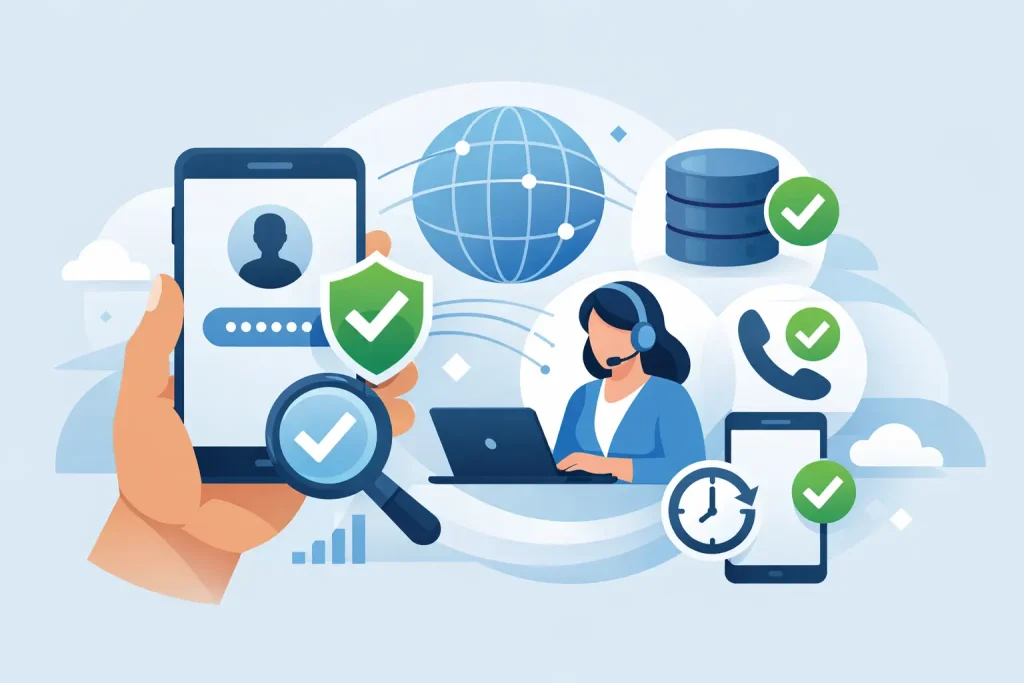
Real-time phone verification is the process of checking a phone number at the point of capture, before it moves into sales, marketing, servicing, or authentication workflows. For most organizations, the goal is not just to determine whether a number is formatted correctly. The goal is to understand whether it is reachable, what type of line it is, whether it can receive calls or texts, and whether the record should be allowed, flagged, or routed differently.
What real-time phone verification actually checks
If your current process only validates that a phone number has 10 digits and a valid area code, you are catching formatting errors, not operational risk. Real-time verification should generate decision-ready signals. Those signals often include whether the number is active, whether it is mobile or landline, whether it is associated with VoIP, whether the carrier information aligns with your use case, and whether the number is capable of receiving SMS.
In some workflows, that is enough. In others, it is not. If you operate in regulated outreach environments, buy leads from third parties, or process applications tied to identity and risk controls, you may also need supporting checks such as reverse lookup, one-time passcode confirmation, or cross-validation against name and address records. A valid phone number is not always a trustworthy one.
How to verify phone numbers in real time inside a live workflow
The most effective implementations happen before a record becomes operational debt. In practice, that means verification should run at submission, not hours later in a batch process after the lead has already been sold, assigned, or contacted.
A typical workflow starts when a consumer enters a number into a form, a call center agent captures it verbally, or an internal user uploads a record into a CRM or intake system. At that moment, the number is sent to a verification service through an API or another supported delivery method. The service returns status and classification signals in real time, and your system uses those signals to take the next action.
That action varies by business objective. A high-intent marketing funnel may allow active mobile numbers to pass immediately, flag VoIP for review, and reject clearly invalid or disconnected records. A lending or identity-sensitive workflow may require additional checks before allowing the application to proceed. A contact center may use line type and status data to determine whether a lead should be dialed, texted, or held.
The key is that verification should not end with a score or label. It should drive routing. If the output does not change behavior, the value is limited.
Step 1: Verify at the point of capture
The closer verification is to data entry, the more value it creates. Point-of-capture validation prevents bad records from contaminating downstream systems and avoids paying to store, score, distribute, and work records that never had a realistic chance of producing contact.
This matters most in paid acquisition, affiliate lead generation, and high-volume inbound environments. If you are buying traffic or leads, every invalid number that enters the funnel creates avoidable cost. Verifying in real time allows you to reject, suppress, or quarantine the record before it reaches sales teams, outbound dialers, or messaging platforms.
Step 2: Interpret line type and status, not just validity
A phone number can be technically valid and still be wrong for the workflow. A landline may be suitable for voice outreach but not SMS. A VoIP number may be acceptable in some consumer journeys and a higher-risk signal in others. A disconnected number should not be routed anywhere except a rejection or remediation queue.
This is where many teams oversimplify the process. They ask whether a number is valid when the real question is whether the number is usable for the next intended action. Verification should reflect operational intent.
Step 3: Add authentication where risk is higher
Real-time phone verification reduces bad data, but it does not prove possession by itself. If fraud prevention, account creation, or high-value transactions are involved, you may need to add one-time passcode authentication or related identity checks.
This is an important trade-off. Additional friction can reduce completion rates, especially in consumer acquisition funnels. But in higher-risk workflows, the cost of letting unverifiable or synthetic records through is usually much higher than the cost of an extra verification step. The right balance depends on channel economics, fraud pressure, and compliance requirements.
When real-time phone verification delivers the most value
The strongest return usually appears where phone data directly affects speed, outreach cost, or regulated communications. Marketing teams see the impact in lead quality and conversion efficiency. Sales operations see it in connect rates and rep productivity. Contact centers see it in fewer failed attempts and cleaner queue management. Compliance teams see it in stronger controls around who gets contacted, how, and through which channel.
There is also a carrier reputation angle that organizations often underestimate. Repeatedly sending calls or texts to unreachable, reassigned, or unsuitable numbers can affect deliverability and create risk around campaign performance. Real-time verification helps reduce that noise before it reaches carriers and messaging partners.
For businesses with legacy systems, the implementation model matters too. Not every organization can deploy a modern API into every environment. In those cases, flexible delivery through batch, file-based workflows, or manual processes still creates value, even if point-of-capture verification remains the ideal.
How to verify phone numbers in real time without slowing down conversion
The common concern is friction. Teams worry that adding verification will hurt form completion, increase latency, or create unnecessary fallouts. That can happen if the logic is poorly designed. It does not have to happen.
The best approach is to separate hard failures from conditional risk. An obviously invalid or disconnected number can be blocked immediately. A valid but higher-risk number type might trigger step-up verification, secondary review, or a different routing path instead of an outright rejection. This preserves conversion where appropriate while still protecting workflow quality.
Latency also matters. Verification should return quickly enough to support live user interactions and agent-assisted capture. If the check is too slow, teams may be tempted to bypass it. If the outputs are too vague, teams may ignore them. Operational adoption depends on response speed and actionability.
What to ask before choosing a verification provider
Not all phone verification is equal, and the differences matter when real money and compliance risk are involved. Buyers should look beyond basic number formatting or generic validation claims. The real questions are about signal depth, delivery options, auditability, and whether the service can support production decisioning.
You should know what the provider can tell you about status, line type, and messaging suitability. You should understand how results are delivered into your stack and whether the system supports both modern and legacy environments. You should also ask how the verification output can be logged, reviewed, and used in compliance-aware workflows.
For organizations operating across marketing, servicing, lending, and identity use cases, modularity is a major advantage. Phone verification often works best when paired with adjacent checks such as reverse lookup, data append, or authentication. VeracityHub is built around that model because operational teams rarely need a single isolated signal. They need a verification layer that improves decision quality across the intake and outreach lifecycle.
The business case is stronger than the technical case
It is easy to frame phone verification as a data hygiene measure. That is true, but incomplete. The larger value is economic control. Real-time verification reduces the number of bad records entering paid workflows, protects agent capacity, supports more accurate channel routing, and lowers the odds of preventable contact and compliance failures.
That is why the question is not whether you can verify phone numbers in real time. Most organizations can. The better question is whether your current intake process is structured to act on verification before bad data becomes expensive.
If a phone number is important enough to trigger a lead purchase, a call attempt, a text message, or an identity decision, it is important enough to verify before the next system touches it.
