
Identity Verification for Lead Forms That Perform
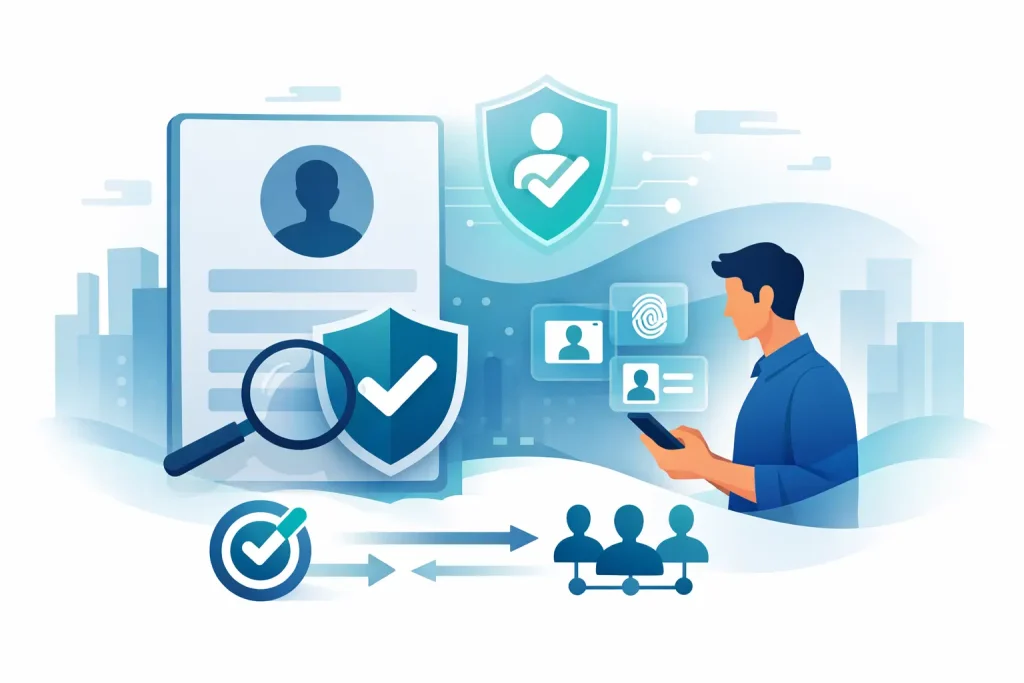
A lead form can look healthy in a dashboard and still be quietly damaging the business. High submission volume means very little if a meaningful share of those records are fabricated, mistyped, duplicated, unreachable, or intentionally deceptive. Identity verification for lead forms addresses that problem at the point where bad data first enters the system – before it gets routed to sales, loaded into a CRM, pushed into dialers, or used in regulated outreach.
For teams that buy media, run call centers, send SMS, or make credit and eligibility decisions, this is not a cosmetic improvement. It is a control layer. The quality of the first record shapes everything that happens downstream: agent productivity, campaign efficiency, contact rates, carrier reputation, compliance posture, and fraud exposure.
Why lead forms fail before sales ever sees the lead
Most lead capture stacks were designed to maximize completion, not to verify whether the person behind the submission is real, reachable, and permitted to be contacted. That gap creates predictable operational problems.
Some failures are accidental. A consumer types the wrong number, uses an outdated email, or enters inconsistent personal details on mobile. Other failures are deliberate. Fraud rings, incentive traffic, bots, and low-intent users can generate submissions that meet format rules while still being commercially useless or risky.
If those records move downstream unchecked, the damage compounds quickly. Marketing pays for leads that cannot convert. Sales teams spend time calling disconnected or reassigned numbers. SMS programs see higher bounce or complaint risk. Compliance teams inherit weak consent and identity evidence. In lending, insurance, and other sensitive workflows, the cost is even higher because weak intake controls can expose the business to fraud and regulatory scrutiny.
What identity verification for lead forms actually does
Identity verification for lead forms is not a single pass-fail event. In practice, it is a set of verification and authentication checks applied in real time to determine whether submitted data is plausible, attributable, reachable, and appropriate for the intended workflow.
That can include matching a name to an address, validating whether a phone number is active and assigned, checking whether submitted identity elements are consistent with known records, and confirming user possession of a device through one-time passcode authentication. In some workflows, it also means appending missing data, assessing line type and status, or using soft credit pull signals when the business has a permissible use case.
The key is that these signals are evaluated before the lead is accepted as production-ready. That gives operators a chance to route the submission differently, require an additional step, suppress the record, or flag it for review instead of treating every form fill as equal.
The business case is bigger than fraud prevention
Fraud is one reason to verify. It is not the only one, and for many organizations it is not even the most immediate financial driver.
The more common issue is simple waste. Paid lead sources can produce impressive top-of-funnel numbers while sending a mix of valid and invalid contacts. Without verification, media teams optimize against volume rather than usable records. The result is spend allocated toward traffic sources that look efficient on paper but generate poor contactability and weak conversion outcomes.
There is also a workforce cost. Contact center teams lose capacity when agents are assigned records with invalid phone numbers, unreachable consumers, or mismatched identity details. If enough bad records pass through, staffing models become less reliable because apparent lead volume no longer reflects actionable demand.
Then there is compliance. Outreach programs that call or text consumers need confidence in the underlying data, especially when phone ownership, reassignment, and consent traceability matter. Verification does not replace consent management, but it strengthens the evidence chain around who submitted the form and whether the contact path appears valid at intake.
Where to place verification in the form workflow
The right answer depends on your economics and risk tolerance. Some teams benefit from hard-stop verification during submission. Others should score the lead in real time and decide what to do after the user clicks submit.
A hard-stop model works well when the cost of accepting a bad lead is high. If each record triggers outbound effort, regulated messaging, or expensive downstream processing, it often makes sense to block suspect submissions immediately or require step-up authentication.
A softer model can be better when conversion friction is a major concern. In that approach, the user completes the form, but the system evaluates the data instantly and routes the lead based on confidence signals. High-confidence leads go straight through. Medium-confidence leads may receive an OTP challenge. Low-confidence leads may be held, deprioritized, or excluded from outreach.
This is where many programs improve performance. They stop treating verification as a binary gate and start using it as routing logic.
Signals that matter most in lead intake
Not every verification signal belongs on every form. The point is not to collect more data than necessary. The point is to validate what is already being captured and add proof where the workflow justifies it.
Phone intelligence is often the highest-value starting point because so many sales and service motions depend on contactability. Knowing whether a number is active, disconnected, VoIP, wireless, or recently reassigned can immediately improve routing and reduce wasted outreach.
Identity matching is critical when the business needs confidence that the person submitting the form is who they claim to be. This matters in financial services, credit prequalification, high-value lead generation, and any intake process vulnerable to synthetic or impersonated submissions.
Possession-based authentication, such as an OTP sent to the submitted phone number, is useful when you need evidence that the user controls the contact channel they provided. It adds friction, so it should be used selectively, but it is highly effective in scenarios where fake submissions and wrong numbers are eroding performance.
Trade-offs: conversion rate versus lead quality
There is no serious verification strategy without trade-offs. Any additional check can reduce raw form completion. The question is whether it improves qualified yield.
That distinction matters. A form with fewer submissions but a higher percentage of reachable, attributable, and policy-compliant leads can outperform a higher-volume form that floods sales and marketing systems with unusable records. The right KPI is not just completion rate. It is verified lead rate, contact rate, cost per qualified lead, and downstream conversion.
This is why testing matters. Some channels tolerate more friction than others. Brand search and high-intent traffic may support stricter validation. Broad social campaigns or affiliate traffic may need progressive verification to avoid suppressing good users along with bad ones.
The answer is usually not maximum strictness everywhere. It is calibrated controls by source, use case, and risk profile.
How engineering and operations should evaluate providers
Verification infrastructure should be judged by operational fit, not just match rates. Teams need to know how fast responses return, what evidence is available for decisioning, how the system handles ambiguous results, and whether the workflow can be audited later.
Integration flexibility also matters. Some organizations can wire real-time APIs directly into web forms and product flows. Others need file-based processing, batch enrichment, or manual review support because the lead intake environment is fragmented across vendors and legacy systems. A provider that only works in modern greenfield stacks may be technically impressive and still be a poor fit operationally.
Compliance teams should also push for clear logic around data handling, permissible use, and decision traceability. If a lead is blocked, stepped up, or rerouted, the business should be able to explain why.
Making identity verification for lead forms useful to the business
The strongest implementations do not end at validation. They turn verification outputs into actions the business can measure.
A verified mobile number can be prioritized for SMS or agent outreach. A mismatched identity signal can move a lead into manual review or suppress it from high-cost call queues. A failed OTP can indicate low intent, fraud risk, or a simple user error, each of which may warrant a different next step. When verification is connected to routing, suppression, and attribution, it stops being a defensive add-on and becomes part of revenue operations.
That is the practical value of treating identity verification as infrastructure. It improves data quality before records spread across platforms, teams, and vendors. For organizations that operate at scale, that is where the real return shows up – lower waste, better contactability, cleaner compliance posture, and more confidence that lead volume reflects actual opportunity.
If your lead forms are feeding expensive workflows, the standard should be simple: do not wait until bad data becomes a reporting problem, a carrier problem, or a compliance problem. Verify earlier, route smarter, and make every downstream system work with data that has earned its place there.
