
TCPA Consent Verification Workflow That Holds Up
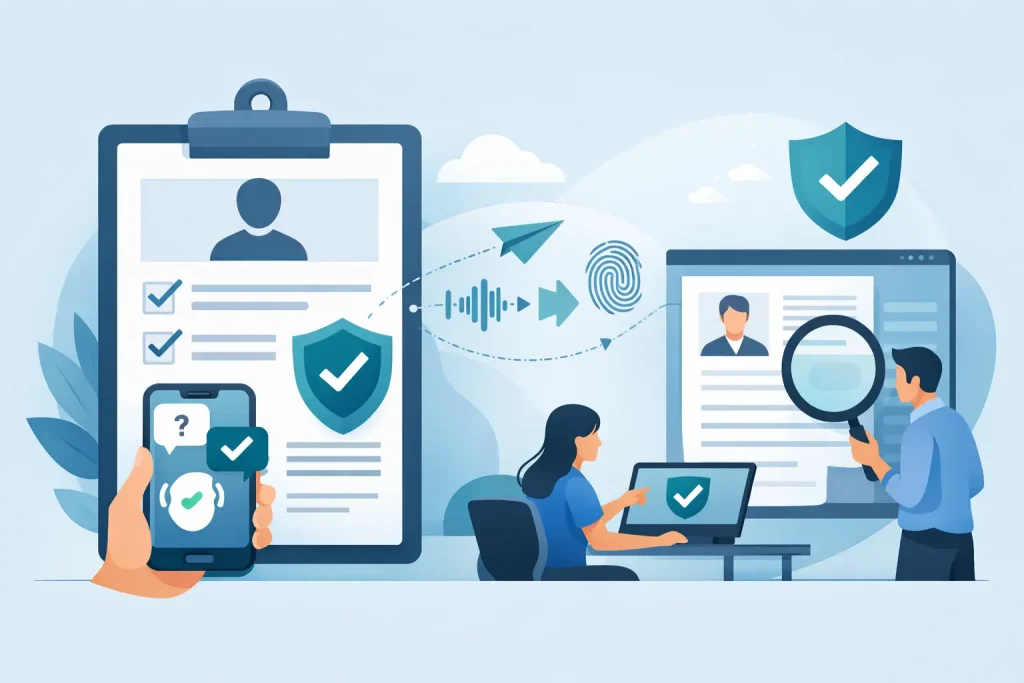
A lead record looks harmless when it lands in your system. It has a phone number, a timestamp, maybe a form URL, and a checkbox flag set to yes. But if that record reaches dialing or SMS without proof that consent was captured, tied to the right person, and preserved in a defensible audit trail, it becomes a liability. A strong tcpa consent verification workflow exists to stop that problem before outreach begins.
For teams that buy leads, generate demand across multiple publishers, or route inbound consumer data through several systems, consent is not a static field. It is a chain of evidence. The operational question is not whether a form had a checkbox. The question is whether your business can prove who submitted the record, what they agreed to, when they agreed, how the disclosure was presented, and whether the phone number you contacted actually maps to the intended consumer.
What a TCPA consent verification workflow needs to prove
At a minimum, the workflow should establish four things before a record is approved for outreach. First, the phone number must be valid and callable or textable under your intended channel strategy. Second, the consent event must be captured with enough detail to support downstream review. Third, the identity and phone relationship should make sense. Fourth, every decision point should be logged in a way that supports auditability.
That sounds straightforward until you look at how records actually move. A consumer submits a lead through a landing page. The publisher posts it to an aggregator. The aggregator sells it to a buyer. The buyer enriches it, deduplicates it, scores it, and pushes it into a CRM or dialer. Somewhere in that chain, context gets stripped out. A yes or no flag survives. The evidence behind it often does not.
That gap is where compliance risk grows. It is also where operational waste starts. If your agents call numbers tied to low-integrity submissions, reassigned lines, or unverifiable consent records, you are not only taking on legal exposure. You are paying for bad inventory, reducing contact rates, and damaging campaign efficiency.
Build the TCPA consent verification workflow at the point of capture
The best place to verify consent is before the record enters the rest of your operating stack. Once data spreads across marketing systems, CRMs, and outreach tools, remediation becomes harder and more expensive.
The first layer is input validation. Confirm that required fields are present, normalized, and formatted correctly. A phone number should be parsed and standardized immediately. If the number fails basic validity checks, there is no reason to continue the consent workflow as if the record were usable.
The second layer is phone intelligence. Determine whether the number is active, what type of line it is, and whether it is reachable through your intended channel. This matters because consent strategy often differs by contact method and line type. A record that passes form validation but fails phone verification should not move forward untouched. It should be quarantined, suppressed, or routed for additional review.
The third layer is consent evidence capture. This is where many organizations underinvest. You need more than a timestamp and a checked box. Capture the source URL, page version, disclosure language shown at submission, IP address, user agent, and submission method. If a lead seller provides consent data, require those fields as part of intake rather than accepting a generic certification statement.
The fourth layer is identity linkage. A phone number alone is not enough. If the record says Jane Smith consented, your workflow should test whether the number has a reasonable relationship to Jane Smith. That does not always mean a perfect match, because households, shared plans, and recent number changes complicate the picture. But it does mean you should score the record for plausibility before sending it downstream.
Verification is not the same as storage
Many teams think they have a consent process because they store screenshots, form text, or lead vendor attestations in a repository. Storage matters, but it is not verification.
Verification means checking the integrity of the record before action is taken. Did the event data arrive intact? Does the source align with approved traffic channels? Is the consent timestamp logically consistent with the lead creation time and transfer time? Has the phone number changed status since submission? Was the record duplicated across multiple campaigns or buyers? These are operational checks, not archival ones.
A defensible workflow treats consent like a decisioning problem. Each lead either passes, fails, or gets routed to exception handling based on evidence quality and verification results. That is a stronger control model than accepting every record first and hoping stored documents will solve any future dispute.
Where workflows usually break
The most common failure is overreliance on vendor-provided attestations. Lead sellers often pass along limited metadata, and buyers accept it because rejecting records hurts volume. That trade-off may preserve short-term throughput, but it weakens your ability to defend outreach activity later.
Another common issue is disconnected systems. Marketing captures consent language. A lead platform stores source data. The CRM only receives a consent flag. The dialer receives even less. When a complaint arrives, operations has to reconstruct the event from multiple systems, often with missing fields and conflicting timestamps.
There is also a timing problem. Consent may have been valid at submission, but the phone record can change before outreach. Reassigned numbers are an obvious concern, but so are disconnected lines, unreachable numbers, and records that were synthetically generated or fraudulently submitted. If the workflow verifies only once and never checks status again before contact, risk increases.
How to operationalize a defensible workflow
A practical model starts with a rules engine at intake. Every inbound record should pass through the same gate before it enters any sales, marketing, or communication system. That gate should validate phone structure, return phone status signals, inspect source and consent metadata, and assign a pass or fail outcome with reason codes.
For records that pass, preserve the evidence package in an immutable or tightly controlled audit layer. That package should travel with the lead ID, not sit in a separate environment with weak linkage. When downstream teams need to prove why a record was contacted, they should be able to retrieve a clear decision history without reconstructing it manually.
For records that fail, do not rely on manual cleanup as the default response. Failed records should be suppressed from dialing and messaging automatically. In some cases, you may route them for retry, reping, or additional identity verification. In others, especially with poor metadata quality or source violations, the right answer is outright rejection.
The most mature teams also run a pre-contact check. This is especially useful when there is a delay between lead capture and outreach. A number that was valid at intake may not be safe or productive to contact later. Rechecking line status and related phone signals before the first touch can improve both compliance posture and contact rates.
Why identity and phone verification belong in the same flow
A consent record is only as useful as its connection to a real consumer. If your workflow verifies form completion but ignores identity quality, you can still end up with fake submissions, mistyped phone numbers, and mismatched ownership scenarios entering outreach programs.
That is why a modern TCPA consent verification workflow should not be isolated from the rest of your verification stack. Phone validation, reverse lookup, identity matching, one-time passcode authentication, and source-level controls each solve a different part of the same problem. They help establish that the person who submitted the record is reachable at that number and that the consent event can be tied back to a credible identity trail.
This is also where infrastructure matters. If verification can only happen in one channel or one application, controls break as soon as the business changes process. Teams need workflow support that can operate in real time through API, in scheduled batches through file delivery, and in exception cases through manual review. That flexibility is what makes controls usable across both modern product stacks and older operational environments.
The business case is bigger than compliance
Most buyers first look at consent verification because they are trying to reduce regulatory exposure. That is valid, but incomplete. Better verification improves lead economics.
When invalid or weakly evidenced records are filtered earlier, media waste drops. Sales teams spend less time on unreachable or low-integrity leads. Messaging programs preserve sender quality by avoiding poor numbers. Compliance teams spend less time chasing records across systems. Even conversion performance can improve because cleaner intake tends to correlate with higher-intent submissions.
There is a trade-off, of course. Tighter controls can reduce accepted lead volume, especially if current sources are sending incomplete metadata or poor-quality submissions. But that is usually a visibility problem, not a downside of verification. The workflow is exposing hidden cost that was already there.
A serious infrastructure partner will help organizations design around that reality by making verification decisions transparent, configurable, and auditable. That is the difference between adding another checkbox to intake and building a control layer that actually protects the business.
If your current process cannot show who consented, what they saw, how the number was verified, and why the record was approved for contact, the workflow is not finished yet. Fixing that before the next campaign launch is usually cheaper than defending it afterward.
