
Telecom Fraud Prevention That Protects Every Call
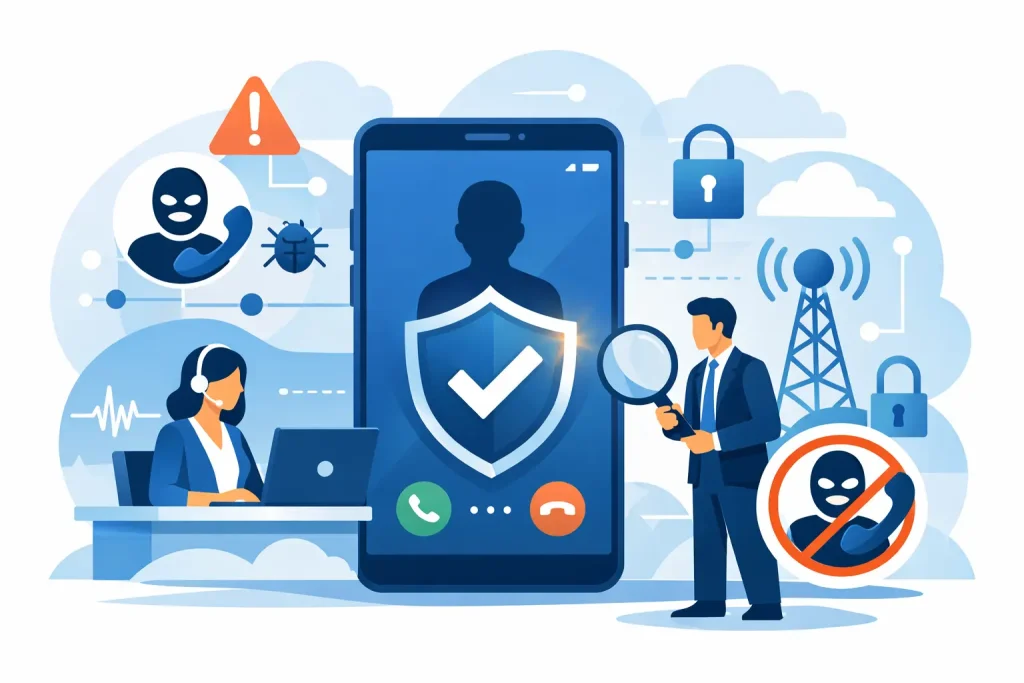
A fraudulent phone record rarely announces itself as fraud. It enters as a lead form submission, a new account application, a password reset request, or a customer record with a number that appears valid at first glance. By the time it reaches a dialer, messaging platform, agent queue, or underwriting workflow, the cost has already started to accumulate. Effective telecom fraud prevention moves the control point upstream, where organizations can assess whether a phone number, identity, and communication request are credible before routing resources toward them.
For teams operating at scale, this is not only a security problem. It is a data quality, carrier reputation, conversion efficiency, and compliance problem. The same unverified record can waste paid media spend, create an unproductive call attempt, trigger an OTP attack, expose a contact center to consent disputes, and contaminate performance reporting.
Why telecom fraud prevention starts at intake
Fraud controls often focus on the transaction that causes the most visible loss: a fraudulent payment, an account takeover, or an unauthorized change of credentials. That control matters, but it comes late in the sequence. Telecom-related risk often begins when a business accepts a phone number without understanding its current status, ownership context, reachability, or relationship to the person submitting it.
A number may be disconnected, recently reassigned, associated with a virtual service, forwarded, invalid, or entered by an automated script. It may belong to a legitimate consumer but be paired with a mismatched identity. It may be valid and reachable, yet unsuitable for the intended outreach because the organization cannot substantiate consent or applicable communication rules.
Treating every syntactically valid number as a usable customer record creates false confidence. A format check can confirm that a number has the right number of digits. It cannot establish whether that number is active, whether it can receive a one-time passcode, whether it is likely mobile or landline, or whether the submitted identity makes operational sense.
The operational objective is straightforward: prevent low-quality and high-risk records from advancing automatically. Some records should be rejected. Others should be challenged with additional authentication, routed to manual review, suppressed from outreach, or marked for lower-priority handling. The right action depends on the workflow and the cost of a wrong decision.
The fraud patterns that affect calling and texting operations
Telecom fraud is a broad category, and controls should match the abuse pattern. For example, a lead generation team may be primarily concerned with fake submissions that inflate acquisition metrics. A fintech platform may be focused on account takeover, identity mismatch, and OTP interception. A contact center may need to prevent calls and texts to unreachable, reassigned, or improperly consented records.
Common patterns include:
- Fake or automated lead submissions that use fabricated identities, recycled numbers, or numbers selected only to pass basic form validation.
- Account takeover attempts where an attacker uses social engineering, compromised credentials, or a changed phone number to take control of an existing account.
- OTP abuse such as repeated code requests, number enumeration, traffic pumping, or attempts to exploit weak recovery flows.
- Reassigned-number exposure where outreach intended for a prior customer reaches a new subscriber, creating privacy, compliance, and customer experience risk.
- Contact data mismatch where a phone number is technically valid but does not align with the identity, address, or other attributes supplied by the applicant.
These patterns overlap. A fraudulent record can look like a marketing lead on day one, a costly call attempt on day two, and a compliance incident when messaging begins. That is why fraud prevention cannot live solely inside a security team or a dialer configuration. It requires shared controls across acquisition, identity, communication, and data operations.
Build a verification layer before downstream routing
The strongest control is not a single fraud score. It is a verification layer that applies the right checks at the point where data enters the business and again when risk changes. In practice, that means evaluating phone and identity signals before a record enters a CRM, before a lead is sold or routed, before an agent begins outreach, and before a sensitive action is approved.
Validate phone status, not just phone format
A phone status check should establish more than whether a number can be parsed. Organizations need actionable intelligence about the number’s current condition and routing characteristics. An inactive or disconnected number should not receive the same treatment as an active mobile number. A number with a status that increases fraud or contactability risk may warrant a different route, additional verification, or suppression.
This step reduces waste immediately. Marketing teams can avoid paying for records that cannot be contacted. Call centers can protect agent time. Product teams can reduce failed authentication attempts. Messaging teams can avoid sending traffic to records that create poor delivery performance or complaint risk.
The timing matters. Real-time checks are appropriate when a consumer is actively submitting a form, enrolling, logging in, or requesting a code. Batch verification is useful for legacy databases, purchased files, and periodic hygiene programs. Mature programs typically use both: real-time controls for new intake and scheduled checks for records whose phone status may have changed.
Pair phone signals with identity verification
Phone intelligence alone is not identity proof. A valid number can still be used in a fraudulent application, and a legitimate consumer can submit a number that is new, shared, or difficult to classify. The better question is whether the signals align sufficiently for the specific business action.
Identity verification and reverse lookup capabilities help teams compare submitted information with available records and identify gaps that deserve attention. A mismatch does not automatically mean fraud. Consumers move, change numbers, use family plans, and make data-entry mistakes. But mismatches should influence routing. A low-risk purchase may proceed with limited friction, while a high-value loan application, account recovery request, or regulated enrollment may require stronger authentication or manual review.
This is where a layered approach outperforms blunt blocking rules. Overly aggressive filters can reject legitimate prospects and suppress conversion. Underpowered rules let fraud enter the system. Risk-based workflows preserve legitimate demand while applying more scrutiny where the potential loss is higher.
Use OTP authentication with controls around it
One-time passcodes are useful because they confirm access to a communications channel at a moment in time. They are not a complete fraud strategy. An OTP can be intercepted through social engineering, redirected after a SIM-related event, or abused through repeated request activity. It confirms possession of a number, not necessarily the full identity or intent of the person requesting access.
A well-designed OTP flow should be supported by rate limits, monitoring for repeated attempts, clear expiration windows, and escalation rules for suspicious behavior. Organizations should also consider the transaction context. Confirming a phone number for a newsletter signup is different from approving a password reset, changing a payout destination, or opening a financial account.
The operational benefit is not just reduced fraud. Controlled authentication can improve auditability by showing when verification occurred, which number was used, what action was authorized, and whether the request matched expected risk thresholds.
Make communication compliance part of the control design
Fraud prevention and communication compliance are frequently managed as separate workstreams. That separation creates gaps. A record that is suspicious, unreachable, reassigned, or poorly documented should not simply move into outbound calling or texting because it passed a minimal lead validation step.
Communication workflows need clear decisioning around phone status, consent evidence, suppression handling, and record provenance. Teams should be able to answer practical questions: Where did this number originate? When was it verified? What status did it return? Was the record changed after consent was captured? Which system authorized the call or text?
Those answers matter when a consumer disputes contact, a carrier flags traffic quality, or an internal team investigates why a campaign underperformed. Audit-ready processes also make it easier to identify recurring source problems. If a particular publisher, form, affiliate channel, or integration produces excessive invalid or high-risk numbers, the business can correct the source rather than absorbing the loss downstream.
Measure fraud prevention as an operating outcome
A telecom fraud prevention program should not be judged solely by the number of records blocked. Blocking volume can rise simply because a rule is too broad. Instead, measure whether verification improves the economics and reliability of the workflows it protects.
Useful indicators include contact rates by acquisition source, invalid-number rates, OTP completion and failure patterns, agent connection rates, records routed to manual review, complaint trends, and conversion quality after verification. For financial services, teams may also compare fraud loss, application quality, and approval outcomes across verification paths.
The most valuable analysis connects signals to decisions. If active mobile verification plus identity alignment produces materially better downstream conversion, that is evidence to prioritize those records. If a certain traffic source produces high OTP request volume but low completion and poor account quality, it may require throttling, additional challenges, or commercial review.
VeracityHub supports this approach by providing phone status checks, identity verification, reverse lookup and data append, OTP authentication, and flexible delivery through API, FTP, and manual workflows. The goal is not to force every operation into one model. It is to give teams usable verification signals where their data actually enters and moves through the business.
Start with the decision that creates the most avoidable loss
The right first deployment depends on where bad data creates the fastest financial or compliance impact. For some organizations, that is filtering invalid leads before CRM intake. For others, it is verifying phone changes before account recovery, screening lists before an outbound campaign, or tightening OTP controls around high-risk actions.
Start with a workflow that has a measurable failure mode and a clear owner. Define which signals will change the decision, what happens when a record fails or is uncertain, and how results will be monitored. Then expand the verification layer across adjacent workflows.
The practical standard is simple: a phone number should earn its place in a customer workflow before the business spends money, sends a message, places a call, or trusts it to authorize a sensitive action.
