
How to Flag Reassigned Numbers Before Outreach
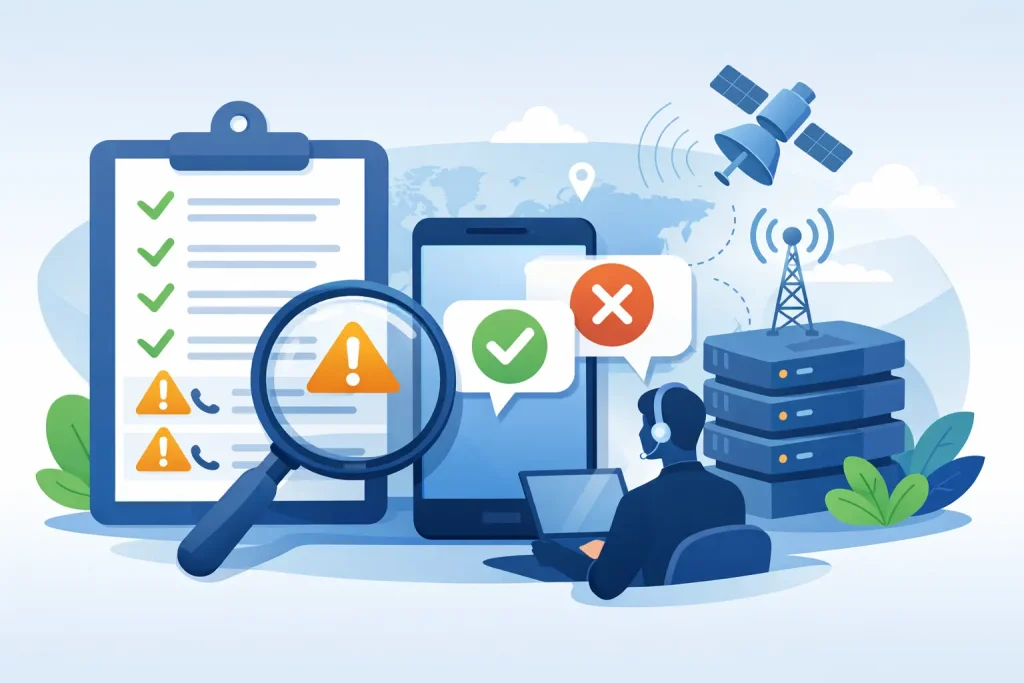
A phone number can remain syntactically valid, appear active, and still belong to the wrong person. That is the operational problem behind how to flag reassigned numbers. When a former customer, applicant, or lead gives up a mobile number, the carrier may assign it to a new subscriber. If your systems continue treating that number as belonging to the original contact, every call or text that follows can become a wrong-party interaction.
For organizations that contact consumers at scale, reassigned-number handling is not a list-cleaning exercise. It is a control point for consent, contactability, agent productivity, carrier reputation, and compliance. The effective approach is to identify the signal before an outreach decision is made, preserve an auditable result, and route the record according to a defined policy.
What makes a number reassigned
A reassigned number is a telephone number that was disconnected from one subscriber and later activated for another. The number itself has not become invalid. In fact, an ordinary line-type or connectivity check may show that it is active and reachable. That result alone does not establish that the current subscriber is the person who supplied the number to your organization.
This distinction matters because teams often combine several separate questions into one: Is the number formatted correctly? Is it connected? Is it mobile or landline? Does it still belong to the consumer in our record? Each question requires a different signal. A reassigned-number check is specifically concerned with whether the number’s assignment history has changed relative to the consumer relationship or reference date you hold.
The risk grows with the age of the record. A recently verified mobile number may be suitable for a current workflow, while a number collected months or years ago may require a fresh review before it enters a dialing, SMS, collections, marketing, or identity-resolution process. High-volume files purchased from partners, reactivated dormant leads, and legacy CRM records deserve particular scrutiny.
How to flag reassigned numbers in your workflow
The best time to flag a reassigned number depends on how the number enters and moves through your business. Most organizations need controls at intake and again before outbound activation. A single historical check is rarely sufficient for records that remain in the database and may be used later.
Start with a clean, canonical phone record
Normalize each number before verification. Store the number in a consistent format, retain the country code, remove presentation characters, and validate that the record represents a plausible US number. Keep the original submitted value separately when appropriate for dispute review and source analysis.
Then connect the phone number to the consumer record, collection timestamp, source, and consent evidence. The reference date is critical. A reassignment decision is not simply a property of the phone number. It is evaluated against the point in time when your organization last had a valid relationship or reliable confirmation that the consumer controlled that number.
If the source cannot provide a collection date or consent evidence, treat the record as higher risk. A number that tests as active cannot repair missing provenance.
Query a reassignment data source before outreach
Send the normalized phone number and the relevant reference date to a reassigned-number verification service. The response should be converted into an actionable status, not buried in a data field that operations teams must interpret manually.
Your routing logic might classify results as clear, possible reassignment, confirmed reassignment, unavailable, or indeterminate. Exact categories will depend on the provider and the data available, but the goal is consistent: separate records that may be safely progressed from records that require suppression, re-verification, or human review.
A confirmed reassignment result should generally stop automated calling and texting tied to the prior consumer. A possible or indeterminate result may warrant a more conservative route, especially for regulated outreach or high-risk use cases. The appropriate threshold depends on your business model, the communication channel, the age of the consent, and the consequences of a wrong-party contact.
Write the result back as a control, not a note
A useful flag is durable, time-stamped, and enforced downstream. Write the reassignment status, check date, reference date used, provider response code, and decision taken back to the system of record. If the number is suppressed, include a suppression reason that downstream platforms can honor.
Do not rely on an agent note or a static spreadsheet. Your dialer, SMS platform, campaign audience builder, collections platform, and vendor exports should all consume the same control. Otherwise, a number excluded from one campaign can still reappear through a batch file, an agent queue, or a third-party activation workflow.
This is where data governance becomes operationally valuable. A flag must travel with the record and have a clear precedence rule. For example, a reassigned-number suppression should override a marketing eligibility field until the consumer re-establishes identity and provides valid contact information.
Create a safe re-verification path
Flagging should not automatically mean deleting the entire consumer record. It means the current phone-to-person association is no longer reliable. Preserve the record according to your retention policy, but remove the number from outreach eligibility tied to the previous subscriber.
If the person returns to your application, portal, or service flow, collect a fresh number and verify it at the point of capture. One-time passcode authentication can provide stronger evidence that the person controls the submitted phone. Where appropriate, compare the returned identity details against available identity and phone signals before restoring outreach permissions.
The operational rule is simple: a new number or a revalidated number should create a new, dated evidence trail. Do not overwrite prior flags without recording why the status changed.
Use reassignment flags differently across channels
Calling and texting should not use identical decision rules. SMS and voice each have their own consent and consumer-experience risks, while email, direct mail, and account-login workflows may need different fallback paths.
For outbound calling, remove reassigned numbers from automated and agent-assisted queues. Agents should see a clear reason code rather than being asked to diagnose whether a bad number is disconnected, wrong-party, or reassigned. That distinction improves disposition quality and prevents repeated attempts.
For text messaging, stop messages to the flagged number immediately and ensure the suppression reaches every messaging vendor and campaign segment. Continuing to message a reassigned number can also contribute to complaint activity and carrier filtering, affecting deliverability beyond the individual record.
For lead generation, a reassignment flag is useful feedback on source quality. A high rate from a particular publisher, age band, or transfer path may signal stale records, weak consent capture, or poor data handling before the lead reaches your intake system. Measure reassignment rates by source, campaign, and elapsed time since collection instead of treating every bad number as random noise.
Avoid the common implementation failures
The first failure is confusing connectivity with identity. An active mobile result is not proof that the intended consumer still owns the number. The second is checking only once. A number can be valid at acquisition and reassigned before a later re-engagement campaign.
The third failure is failing open when data is unavailable. Some teams allow an indeterminate response to pass directly into high-volume outreach because it is not a confirmed reassignment. That may be reasonable in a low-risk workflow with other current verification evidence. It is less defensible when consent is old, the number came from a third party, or the planned communication has elevated regulatory exposure.
The fourth failure is treating suppression as permanent without providing a re-verification route. That can reduce contactability unnecessarily. The better model is controlled reactivation: suppress the old phone relationship, then restore eligibility only when new evidence supports it.
Finally, do not treat a reassignment result as legal advice or as a substitute for a complete consent and compliance program. Outreach policies must still account for applicable federal and state requirements, internal rules, channel-specific consent standards, and record-retention obligations. The value of the flag is that it gives your compliance and operations teams a defensible signal to act on before a message is sent.
Build an auditable decision trail
At scale, the question is not whether your team can identify one reassigned number. It is whether you can show how the system handled thousands of them. Maintain a record of the source data, date of verification, response category, suppression action, workflow that consumed the result, and any later re-verification event.
This trail supports more than compliance review. It helps data teams measure false-contact reduction, marketing teams quantify recovered media efficiency, and operations leaders identify where stale records are entering the business. A verification layer such as VeracityHub can deliver reassignment and phone-status signals in real time or through batch processing, allowing the same control to serve modern APIs and file-based operational environments.
Treat reassigned-number detection as a routing decision made before outreach, not a cleanup task performed after complaints arrive. When the flag is current, enforced across systems, and tied to a clear re-verification process, every downstream team works from a more reliable definition of who can be contacted and why.
