
Why Reassigned Number Compliance Checks Matter
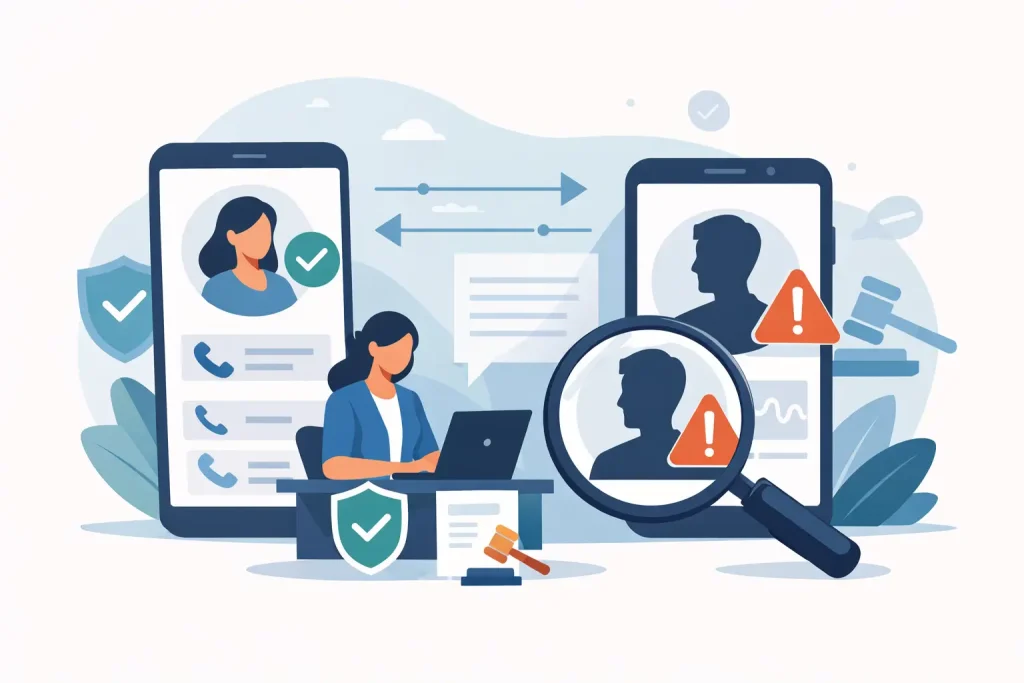
A phone number can look valid, pass formatting, and still create compliance exposure the moment your team calls or texts it. That is the core problem reassigned number compliance checks are meant to address. If a number has changed hands, your prior consent record may no longer apply, and every downstream outreach workflow – from sales follow-up to payment reminders – starts carrying avoidable risk.
For teams that send messages at scale, this is not a narrow legal edge case. It is an operational data quality problem with compliance consequences. A reassigned number can turn a legitimate campaign into wasted spend, reduce contact rates, trigger complaints, and put pressure on carrier reputation. The challenge is that reassignment is not visible from standard validation alone. A number may still be active, reachable, and correctly formatted while belonging to a completely different consumer.
What reassigned number compliance checks actually do
Reassigned number compliance checks evaluate whether a phone number has been disconnected and later reassigned to a new subscriber. That sounds simple, but in practice it solves a very specific gap in phone data workflows. Traditional phone verification can tell you whether a number is valid, line type identified, and sometimes whether it is active. It does not necessarily tell you whether the person who gave consent still controls that number.
That distinction matters under outreach rules where consent is tied to the consumer, not just the digits. If your CRM says a lead opted in six months ago, but the carrier reassigned the line three months ago, your stored opt-in evidence may no longer protect the campaign. The phone number is still real. The relationship behind it is not.
Effective reassigned number compliance checks give operators a way to test that assumption before dialing or texting. In practical terms, they help answer a narrow but critical question: is this still the same consumer-controlled endpoint your records say it is?
Why this issue creates outsized business risk
The cost of bad phone data compounds fast because it touches multiple teams at once. Marketing pays to acquire the lead. Sales or collections spends labor trying to reach it. Compliance owns the complaint risk. Engineering gets pulled into suppression logic, audit trails, and vendor remediation after the fact.
A reassigned number creates friction across all of those layers. The most obvious concern is TCPA exposure, but there are other business impacts that matter just as much day to day. Wrong-party contact rates increase. Agents waste time on unreachable or misrouted calls. SMS deliverability performance can weaken when engagement drops or complaints rise. Brand trust takes a hit when consumers receive communications that were clearly meant for someone else.
There is also a timing problem. Reassignment risk grows with record age. A phone number captured during lead intake may be accurate at origination and risky later if the account sits dormant or the outreach window extends over months. That makes reassigned number compliance checks particularly relevant for lenders, insurers, marketplaces, healthcare outreach programs, collections teams, and any organization that works aged leads or long customer life cycles.
Where reassigned number compliance checks fit in the workflow
The right place to run these checks depends on how your data moves and how quickly it degrades. For some businesses, point-of-capture verification is enough for a meaningful share of records. For others, especially those using recurring outreach or purchased data, reassignment status needs to be tested again before contact.
A practical model usually includes two control points. The first is at intake, where phone validation and identity signals help stop low-quality or fraudulent records before they enter downstream systems. The second is pre-contact, where reassigned number compliance checks help confirm that prior consent assumptions still hold before a call or text is initiated.
That second control point is where many organizations fall short. They treat consent capture as a one-time event and assume phone ownership remains stable. In reality, phone data is dynamic. If your workflow does not account for that, your compliance posture weakens as records age.
This is also where infrastructure matters. Real-time API delivery works well for immediate decisioning inside forms, lead routing, and outbound engagement platforms. Batch processing is often the better fit for CRM hygiene, dormant account review, and campaign-level suppression before launch. Many organizations need both because the risk exists at ingestion and again at activation.
Real-time versus batch is not an either-or choice
There is no universal rule that one method is better. Real-time checks reduce exposure at the moment a user enters data or before a communication is sent. Batch checks help clean large populations where historical records may no longer be reliable. If your outreach depends on both fresh leads and aged records, using only one method leaves a gap.
The trade-off is operational. Real-time decisioning requires tighter integration and low-latency responses. Batch processing is easier to deploy into legacy environments, but it may not catch status changes that happen between the file run and the actual outreach. The right design reflects the speed, scale, and sensitivity of your communication program.
What a good compliance-aware process looks like
Reassigned number compliance checks work best when they are part of a larger decision framework, not a single pass-fail gate. A useful workflow considers the age of the consent, the date of the last successful contact, line type, porting behavior, and whether the number should be suppressed, reviewed, or re-verified through another channel.
For example, if a phone number shows signs of reassignment risk, the correct next step may not always be permanent removal. It may be a hold on automated texting while the record is queued for manual review or alternative authentication. In other cases, the record should be fully suppressed from outbound calling until new consent is captured.
This is where auditability becomes essential. Compliance teams need to show what was checked, when it was checked, what signal was returned, and what action the system took. If a regulator, carrier, or internal legal team asks how your controls work, vague statements about data hygiene are not enough. You need a verifiable process with timestamps, decision rules, and repeatable execution.
A mature program also avoids overconfidence. No data source is perfect, and reassignment signals should be interpreted in context. That does not reduce their value. It means your workflows should be built to use verification signals intelligently, with clear thresholds and exception handling rather than blind automation.
How to evaluate vendors and internal fit
Not every phone verification provider is built for compliance-sensitive outreach. Some focus on formatting and carrier data. Others provide richer status intelligence but do not support the operational controls needed by regulated or high-volume teams.
When evaluating a solution for reassigned number compliance checks, the question is not just whether a vendor can return a status. You need to understand whether the result can be operationalized inside the environments where risk actually occurs. That includes API support for real-time use cases, batch options for large file processing, response structures that can drive suppression logic, and reporting that supports audit review.
You should also look closely at delivery flexibility. Many organizations still run critical outreach and lead workflows across a mix of modern applications and older systems. A compliance control that only works in one environment will not solve a cross-functional data problem. The best verification layer is the one that can be embedded where records are captured, routed, scored, and activated.
For that reason, companies like VeracityHub are increasingly positioned less as standalone data vendors and more as infrastructure partners. The value is not just the signal itself. It is the ability to insert that signal into operational workflows before bad records create cost.
Reassigned number compliance checks are really about control
Organizations tend to talk about phone verification as a deliverability or contactability issue until a complaint lands on the compliance desk. Then the same data problem suddenly becomes a legal and financial one. The smarter approach is to treat reassignment risk as controllable upstream.
That means recognizing a basic truth: a valid phone number is not the same thing as a valid consented contact. If your teams rely on stored phone data to drive outbound communication, reassigned number compliance checks should not be viewed as optional hygiene. They are a practical control that protects conversion efficiency, agent productivity, carrier standing, and compliance posture at the same time.
The strongest outreach programs are not built on bigger contact volumes. They are built on better assumptions about who is actually on the other end of the number.
